What to Check
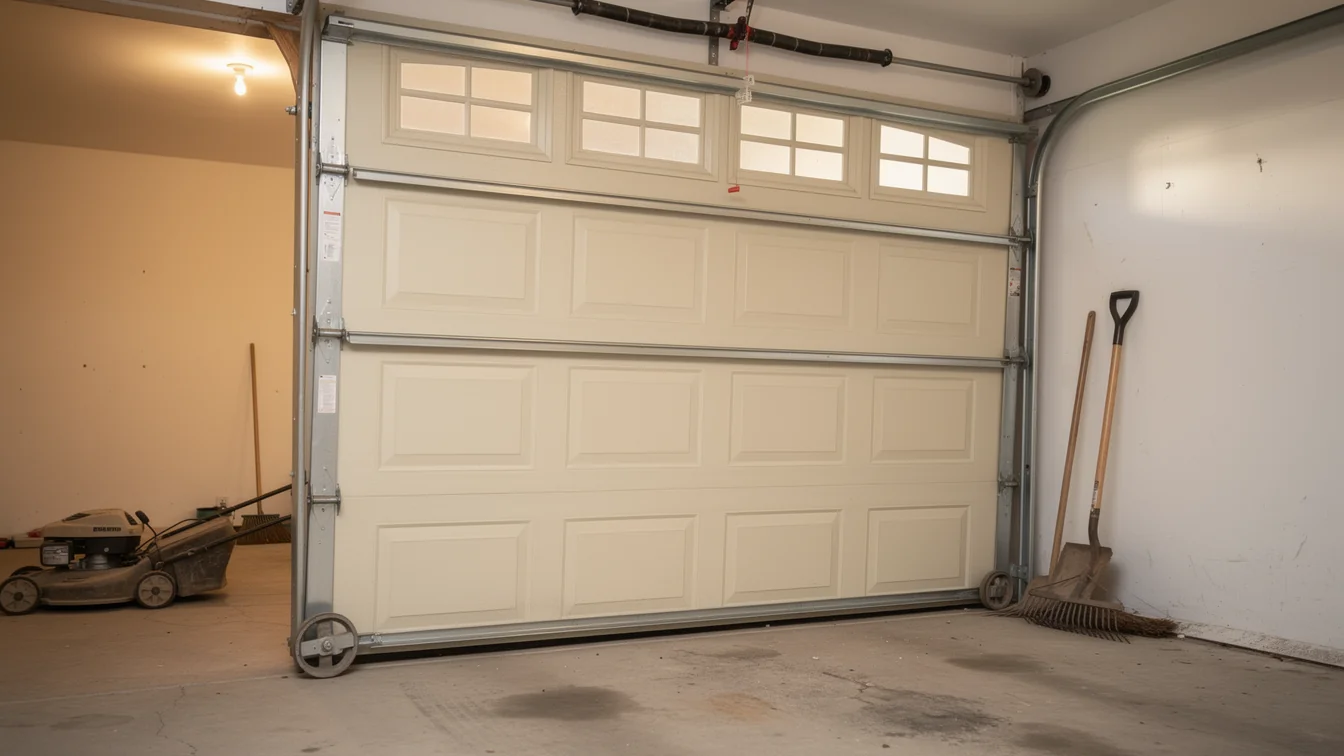
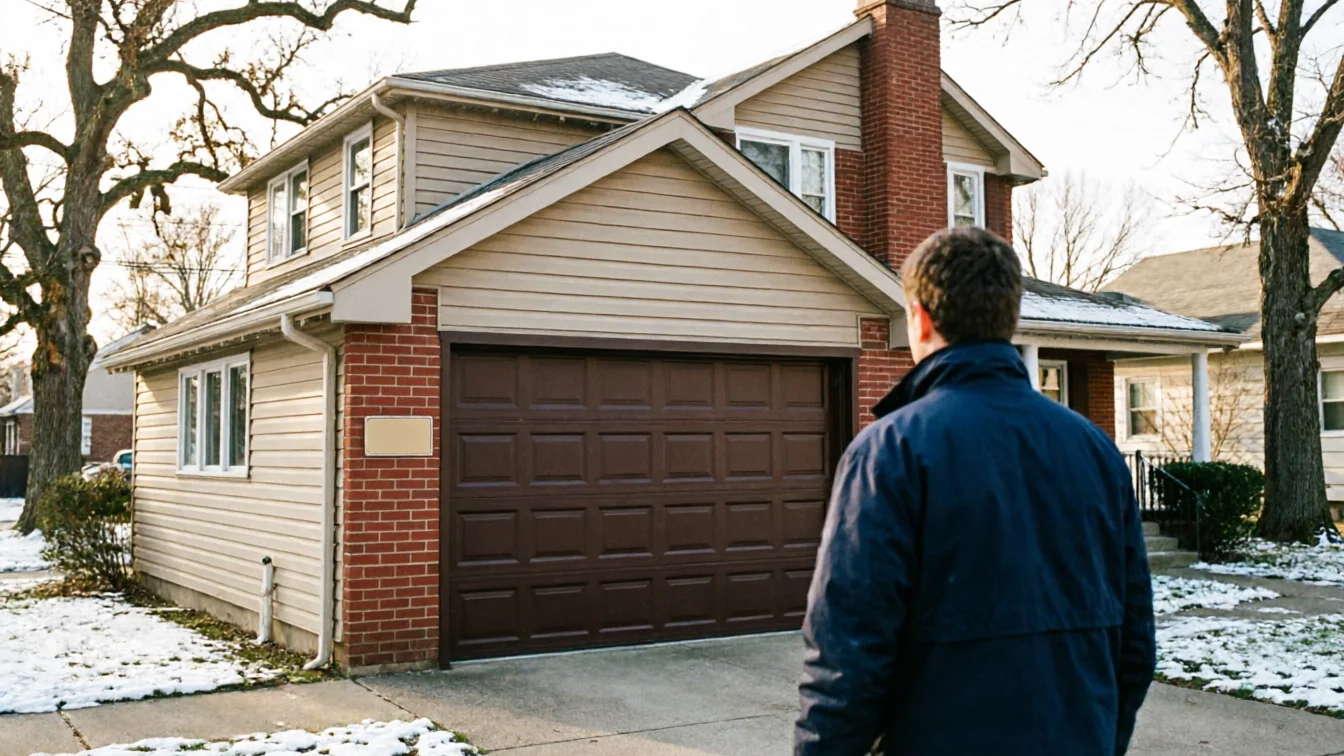
Before you call anyone about a new door, walk out and look at three things: the track, the spring, and the bottom panel. In this part of Novi, most houses date to somewhere between 1938 and 1991, with the typical build year landing around 1965. That matters because a door from that era is usually on a single torsion spring sized for a lighter, non-insulated panel, not the two-car steel doors going in today. If your track is bent or your spring looks stretched unevenly on one side, that's often the sign the door has been fighting hardware it was never designed around.
Check the bottom weather seal too. On a house from the 1960s stock common across this area, the original jamb and header may have settled slightly over sixty years, so a new door needs to be measured on site, not ordered off a size chart. If the opening is out of square by more than a half inch, that's a carpentry fix before a door fix.
One honest limitation: we can't tell you from a phone call whether your door needs a new spring or a full replacement. That call gets made standing in front of it.
The Problem
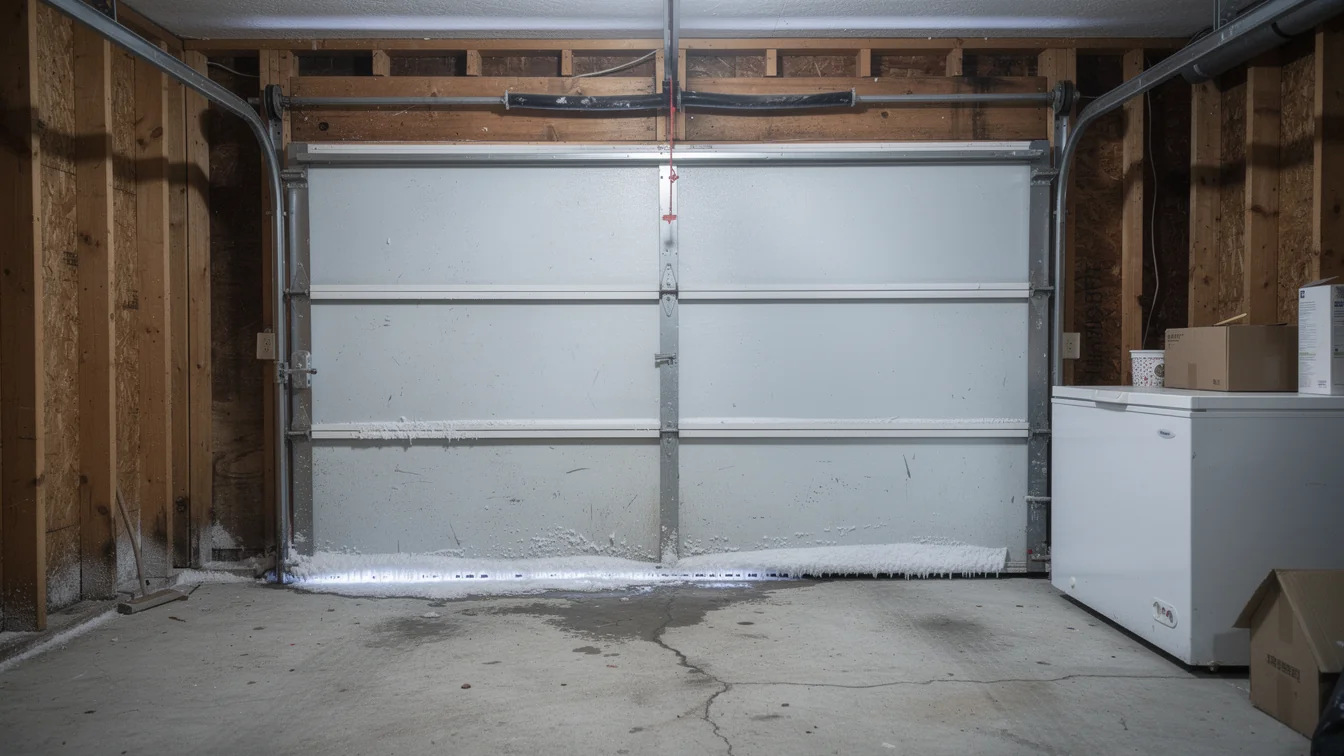
The core issue for a lot of Novi homeowners isn't a broken part, it's a door that was sized and insulated for a different climate expectation than the one we actually get. Novi sits in a cold-climate band with severe winter swings, and a door built decades ago, when most of this area's housing went up, was rarely insulated to today's standard. Steel contracts in deep cold, and a panel that's already thin from age will show new gaps at the bottom corners every winter until it's replaced rather than patched.
Across the wider service area there are roughly 101,657 owner-occupied houses out of 188,906 households, and a large share of them share that same mid-century build window. That means a lot of garages here are carrying doors that are structurally fine but thermally outdated - the panel still swings, but it's not doing the job of keeping a heated garage heated.
The other half of the problem is springs. A door built for the era's lighter construction, now carrying a heavier replacement panel installed somewhere along the way, is often under-sprung. That shows up as a door that's hard to lift by hand or an opener that strains and wears out early.
Season by Season
Fall is when you want to be looking at this, not January. In a cold-severe climate band like this one, the first hard freeze finds every weak seal and stiff hinge a new door would have fixed. If you're buying, getting it installed before the ground freezes means a cleaner job on the threshold and track alignment.
Winter is where an old, thin panel costs you. Steel flexes more in deep cold, and on houses built mid-century, the original frame opening may not be perfectly square anymore, so a winter install on an out-of-square jamb needs extra shimming - tell your installer up front if that's the case.
Spring brings the thaw-freeze cycle that works bolts and hinges loose, which is when older doors on original hardware start rattling or binding. If you've been putting off replacement, this is usually when the decision gets made for you.
Summer is the easiest season for the install itself - no frozen ground, no ice on the track - but it's also the busiest season for everyone doing this kind of work, so lead times stretch. If you know you need a new door, don't wait for the first cold snap to call.
What Local Conditions Do
Two things specific to this area drive what door makes sense here: the age of the housing stock and the cold-severe climate band. A door bought for a newer subdivision in a milder climate doesn't need the same insulation rating or spring sizing as one going into a house built in the 1960s or 70s in a region that sees real winter. That's most of what's around Novi.
Median household income here runs around $90,077, which is relevant mainly because it changes the math on repair-versus-replace. A third spring repair on a door that's already fighting age and cold is rarely the cheaper path over five years; a properly insulated, correctly sprung replacement usually pencils out better once you count the winter energy loss and the repeat service calls.
We don't do cosmetic-only upgrades - if the door works, is insulated to a reasonable standard, and the opener is sound, we'll tell you to keep it. Replacement makes sense here when the age, the insulation gap, and the hardware mismatch all line up, which on this housing stock, they often do.
Talk to a local pro
Garage door trouble in Novi?
Same-day service with honest, upfront quotes.