What to Check
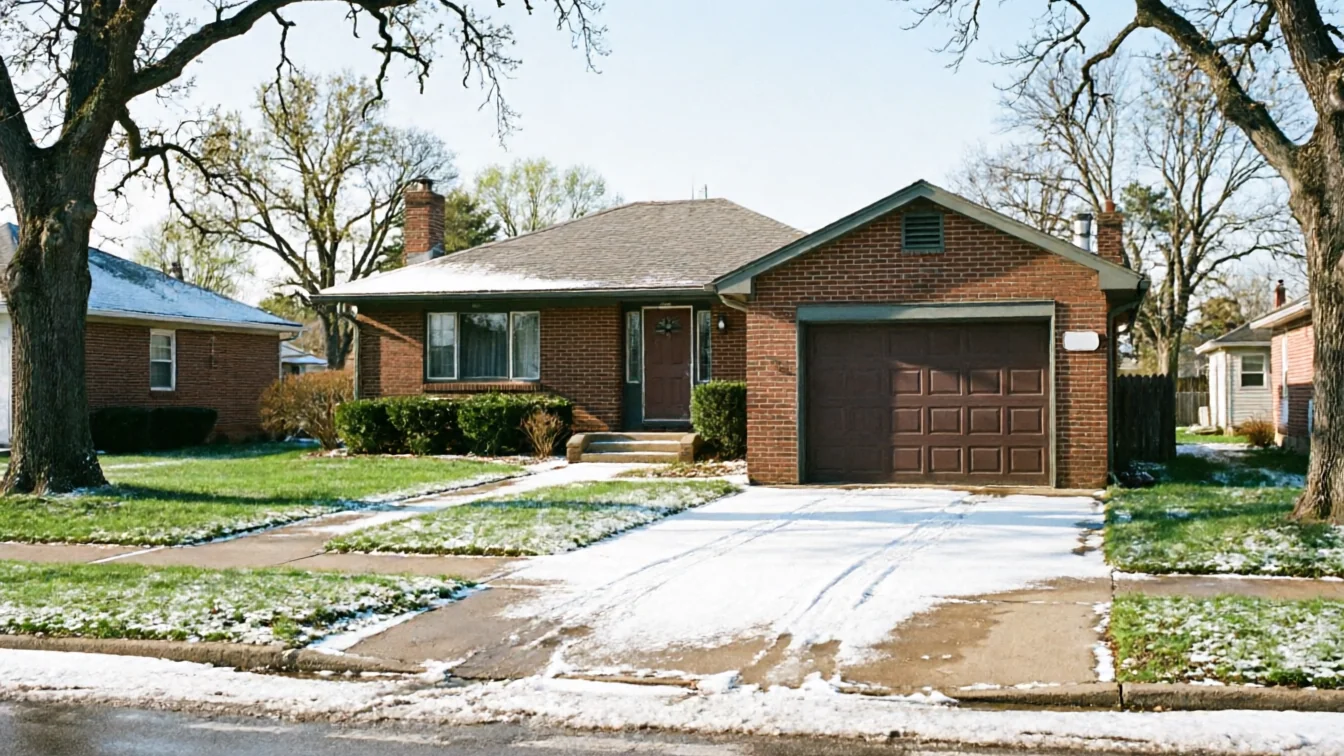
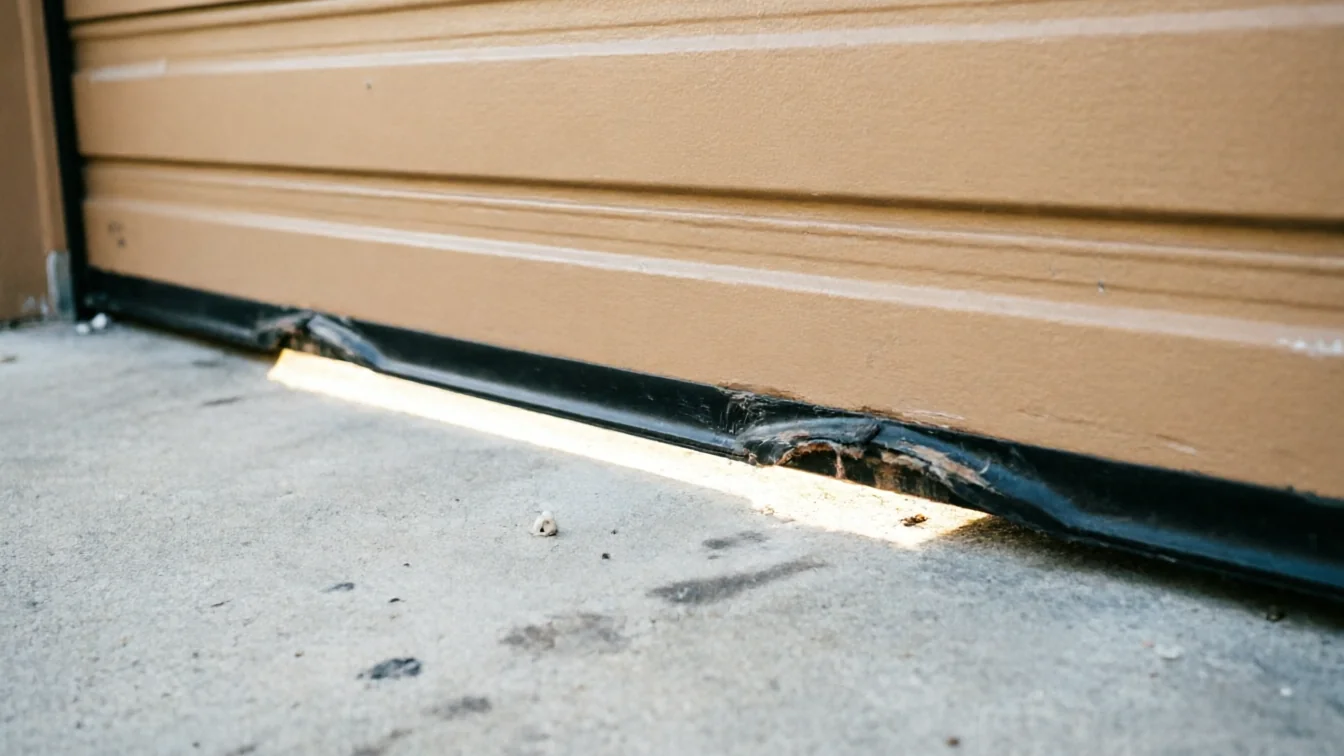
Start at the bottom of the door. Most houses in this area were built between 1938 and 1991, with the median landing around 1965, which means the bottom astragal seal on a lot of these doors is original or close to it. Rubber that old has usually hardened and cracked at the corners, and that's the first place a draught gets in. Run your hand along the bottom edge on a cold morning - if you feel air moving, the seal's done.
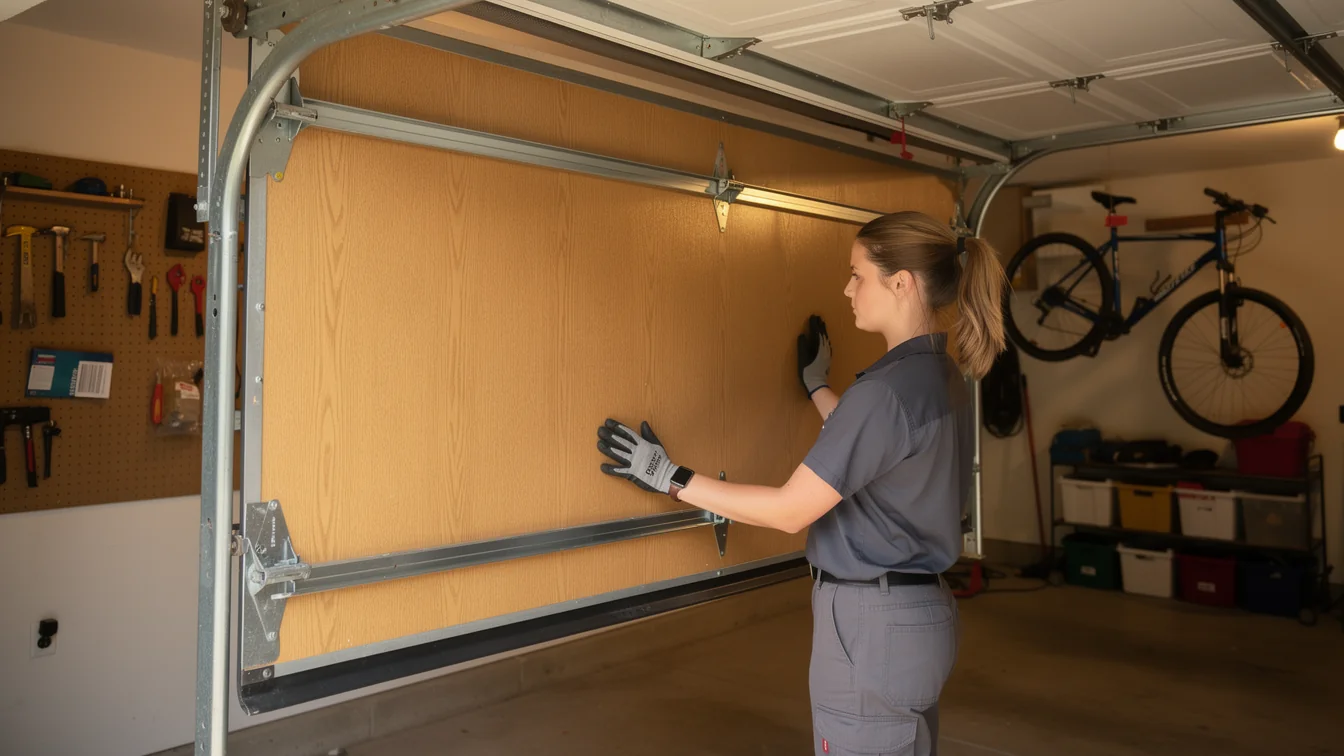
Next, check the vertical weatherstripping along both jambs. On the 1960s and 70s builds that make up most of the stock across this part of the county, the track and jamb were set with steel that was never designed with a thermal break. The stripping tacked to it is doing all the work, and on these older frames it's often stapled rather than channel-set, so it tears loose over time.
Last, look at the top seal where the door meets the header. It's the one people forget. If light shows through at the top corners when the door's shut, that gap is pulling heat out of the garage all winter, not just letting in a bit of cold air.
The Problem
This area sits in a cold-severe climate band, which isn't the same as just "gets cold." It means repeated freeze-thaw cycles through the winter months, not one long freeze. Rubber seals don't fail from cold alone - they fail from flexing hard in the cold, over and over, season after season. A seal that's fine at 40 degrees can crack stiff at 10, and in this band the door sees both in the same week more than once a winter.
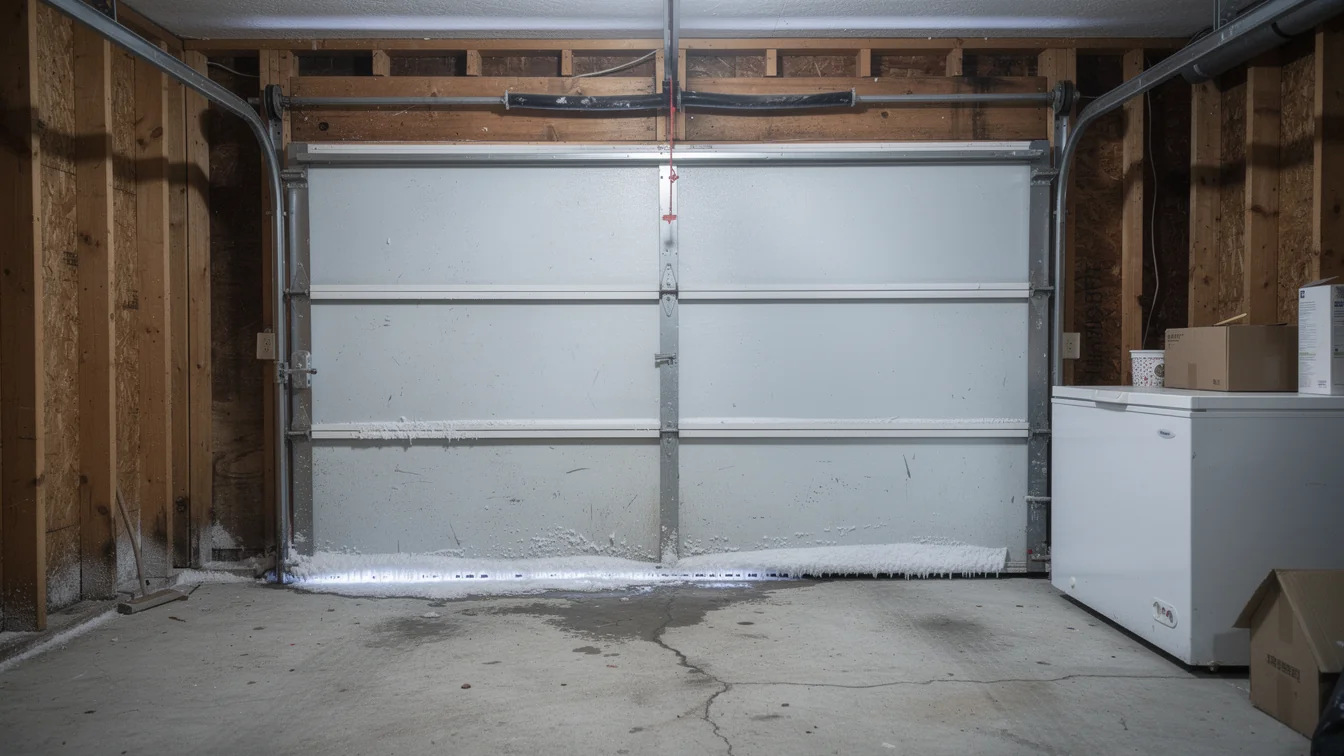
Once a seal cracks, you don't just get a draught. Moist air gets pulled in and condenses on the cold slab or the bottom of the door, and that moisture refreezes overnight, which can bond the seal to the floor or swell the bottom panel. On the original builds from the 1960s and 70s that still make up most of the housing stock here, that bottom panel is often steel without much insulation behind it, so it takes the cold straight through and gives moisture a cold surface to land on. The draught you feel in the house is usually the second symptom, not the first - the first is the ice you'd find if you looked at the bottom seal at 6 a.m.
Season by Season
Fall is when to deal with seals, not spring. Replace a cracked bottom seal or torn jamb stripping in October and it does its job all winter. Wait until January and you're working with frozen rubber and a door that's already let moisture in.
Winter is when the cold-severe band does its damage - the repeated freeze-thaw stress on old rubber, plus whatever moisture got in through a gap, freezing and expanding. This is also when a torsion spring under cold-stiffened lubricant will feel heavier than it should, which owners sometimes blame on the opener when it's really the spring.
Spring thaw is the second stress point. Ice that built up in a cracked seal over the winter melts, and if it melted around the bottom bracket or track, you can get rust starting in spots that stayed wet longer than the rest of the door.
Summer and early fall are the easy months - humidity instead of ice - but they're also the best time to actually fix what winter damaged, before the next freeze-thaw cycle starts again. A seal replaced in September is cheap. The same job done as an emergency call in February usually isn't.
What Local Conditions Do
Across the service area there are 188,906 households and 101,657 owner-occupied houses, and a large share of them share the same build era - 1960s and 70s construction on steel frames that predate modern thermal breaks. That's not a small or unusual group of houses; it's the typical house here, which is why seal failure from age and cold-cycling shows up as often as it does.
Median household income in the area runs $90,077, which tends to mean owners catch a cracked seal and replace it rather than letting the door go until the whole unit needs swapping. That's the right call financially - a seal job is a fraction of a door replacement - but it only works if someone actually checks the seal before it's a January emergency.
One limitation worth saying plainly: a new seal won't fix a door that's racked or a track that's bent from years of a dragging bottom edge. If the door's been fighting a bad seal for a few winters, we check the track and rollers before we quote seal work alone, because sealing a door that's already out of square just buys you a few months.
Talk to a local pro
Garage door trouble in Novi?
Same-day service with honest, upfront quotes.