What to Check
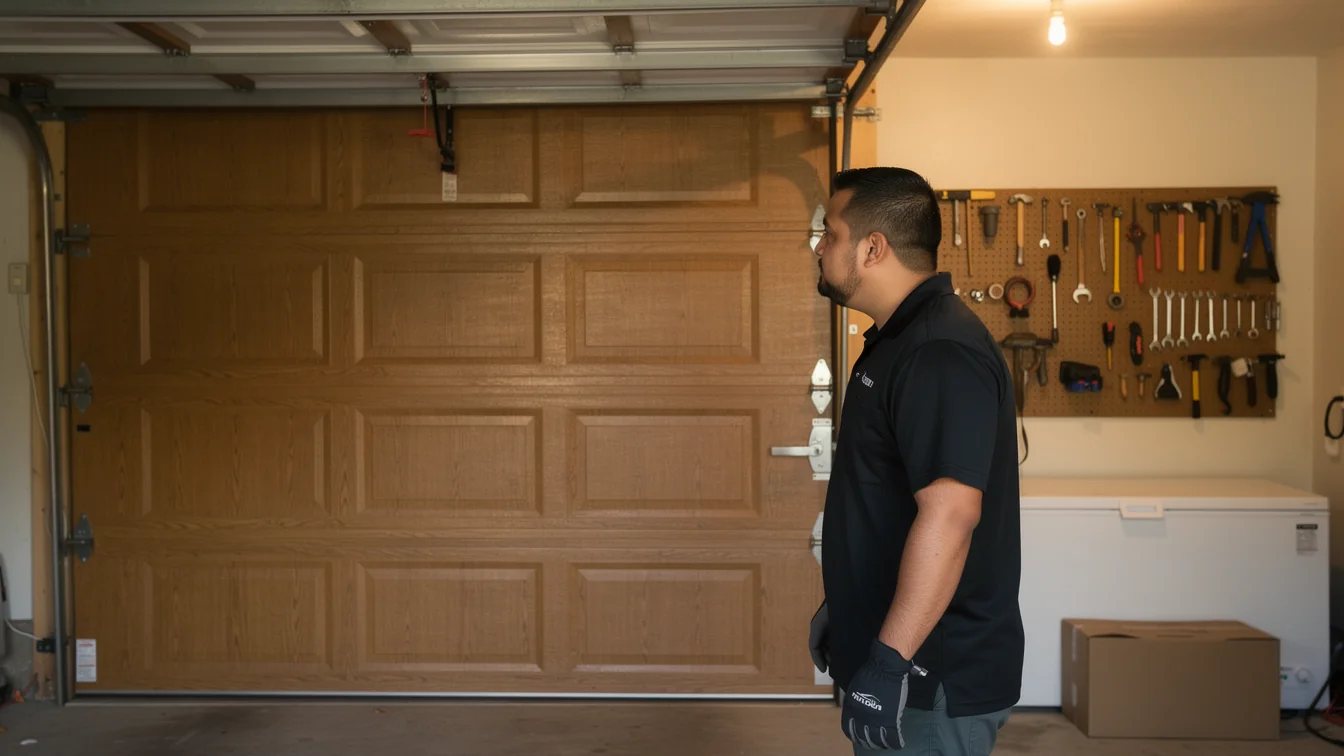
Start with the panel itself. Houses in this service area went up mostly between 1938 and 1991, with the median sitting around 1965, which means a lot of the doors we look at are original or close to it - single-layer steel or wood, no foam core, bolted to hardware sized for a different era. Press on the bottom panel near the corners. If it flexes more than a quarter inch or the seam shows rust bleeding through paint, the steel is thinning from the inside out.
Next, check the springs. On a torsion setup, look for gaps between the coils or a spring that looks stretched compared to its neighbor - that's fatigue, and on a door this old the springs have usually been replaced once already, sometimes with a size that doesn't quite match the door weight. Rollers should turn freely; if they're the original steel wheels rather than nylon, expect noise and uneven travel. Tracks bent more than an eighth of an inch out of plumb put stress on everything downstream of them. None of this tells you to replace the door outright - it tells you what a repair actually has to fix, and whether that list is three items or twelve.
The Problem
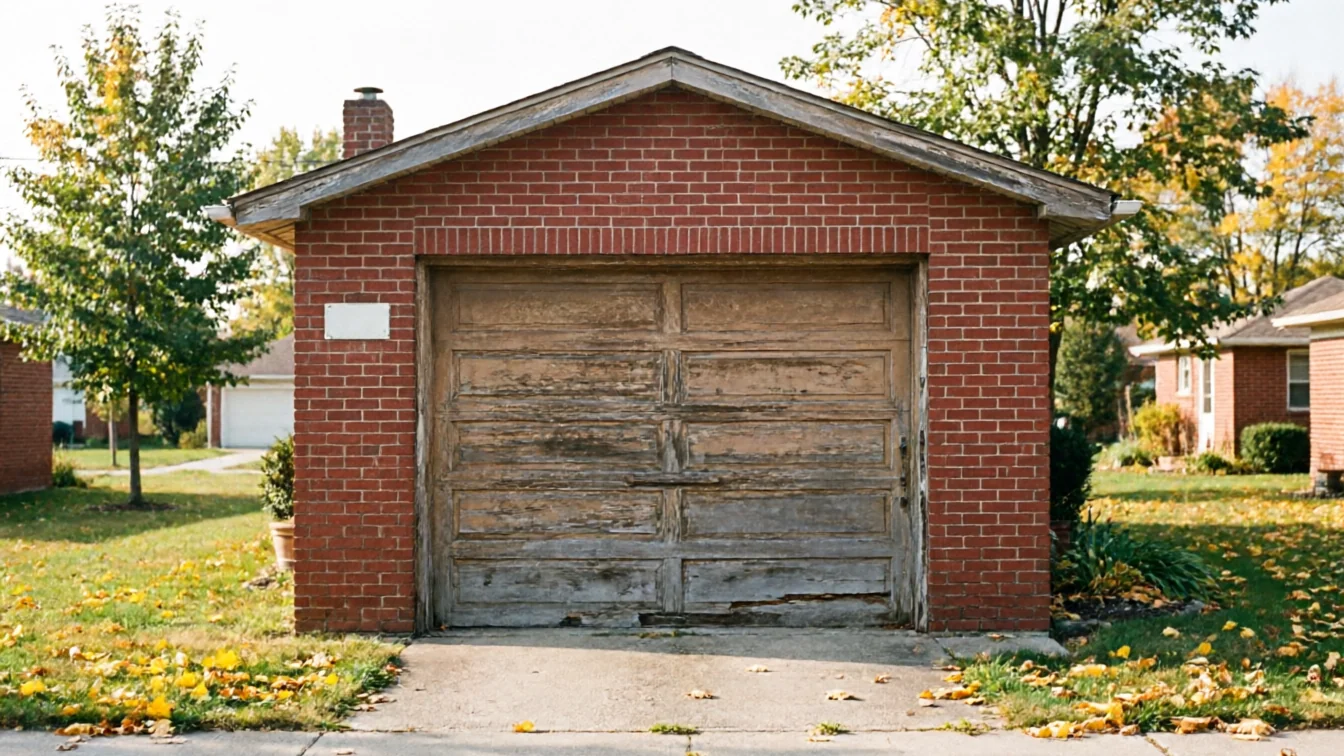
The issue isn't age by itself. It's that a door built when this neighborhood's housing stock was new - median year 1965 - was engineered to a standard nobody builds to anymore. Across the 34 named areas in our service territory, the bulk of what's still in garages is 1960s and 70s steel or wood, single panel thickness, often without a vapor barrier. That construction was fine for the house it came with. It isn't fine as the only thing keeping cold air out of an attached garage sixty years later.
Parts are the real constraint. Hinges, end bearing plates, and some drum sizes from that period aren't stocked new; we either source take-offs or fabricate a workaround, and that adds time and cost that a straightforward spring swap on a newer door wouldn't need. If a repair means hunting down obsolete hardware for a door that's already lost structural rigidity, we'll say so. We don't patch a door just to get a truck out the door and call it solved. Sometimes the honest number for parts plus labor lands within a few hundred dollars of a new insulated door, and at that point we tell the homeowner that, even though it's the smaller ticket.
Season by Season
Novi sits in a climate band rated cold-severe, and that cuts differently by season on a fifty-to-sixty-year-old door than on a new one. Late winter is when we get the most calls on old torsion springs - repeated freeze-thaw cycles make the coil wire brittle, and a door that was already marginal snaps on a cold morning rather than a mild one. Uninsulated steel panels from the 1960s also contract more than modern double-wall panels, so seams that were tight in July can show daylight by February.
Spring and early summer bring swelling in original wood doors, if the house still has one - panels that stuck in the frame all winter suddenly bind on the track as humidity rises. Fall is when we see the most hardware failures generally, not because the season does anything special, but because a door that's been quietly struggling all year finally gets tested by the first real cold snap. None of this is a reason to panic every October. It's a reason to have the door looked at before the first hard freeze rather than during it, when a same-day fix is harder to schedule.
What Local Conditions Do
The cold-severe rating for this area means wider daily temperature swings than a milder climate zone, and that matters more on an older door because the materials move more. A new insulated panel has two steel skins sandwiching foam, which resists warping. A 1965-era single panel doesn't have that buffer - it expands and contracts as one piece, and over sixty winters that cycling loosens fasteners, cracks old paint seals, and works screws out of wood jambs that have shrunk slightly from decades of dry heat in winter.
With 101,657 owner-occupied houses across this area and a median household income of $90,077, we see a fairly consistent pattern: owners here are willing to pay for a repair when the door's bones are sound, and willing to replace when they're not, rather than stretching a marginal fix for a few more years. That's a reasonable way to decide. A door that's structurally tired in a climate that swings hard seasonally is a worse bet to nurse along than the same door would be somewhere milder.
Talk to a local pro
Garage door trouble in Novi?
Same-day service with honest, upfront quotes.