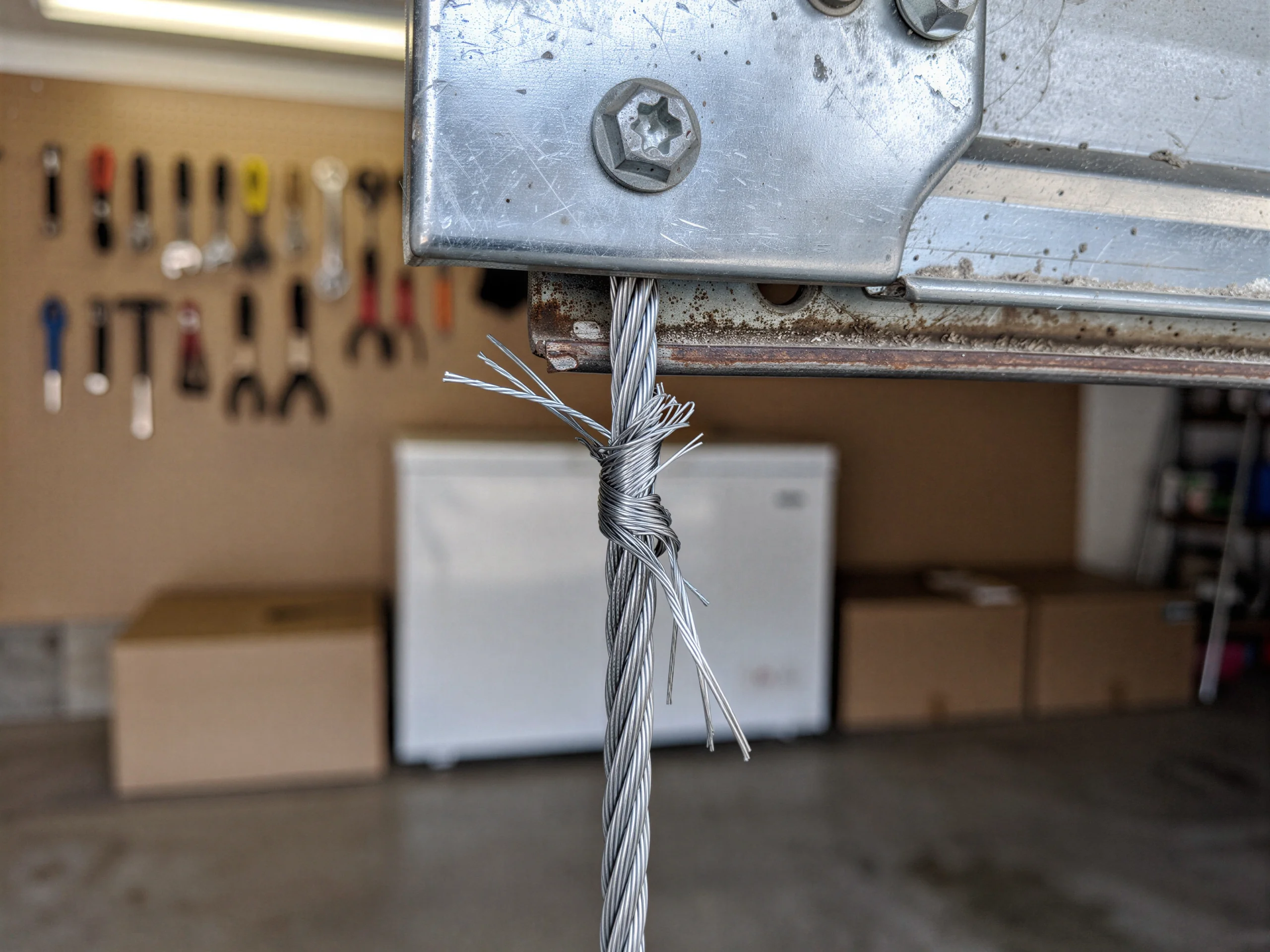
Cable fully snapped and coiled
Sometimes the cable has already let go and you'll see it coiled loose on the floor or hanging from the drum with the door stuck wherever it was last moving.
Novi, MI
Snapped or frayed garage door cable in Novi? We explain what the repair takes, what to look for, and why older torsion setups in this area fail the way they do.
The repair
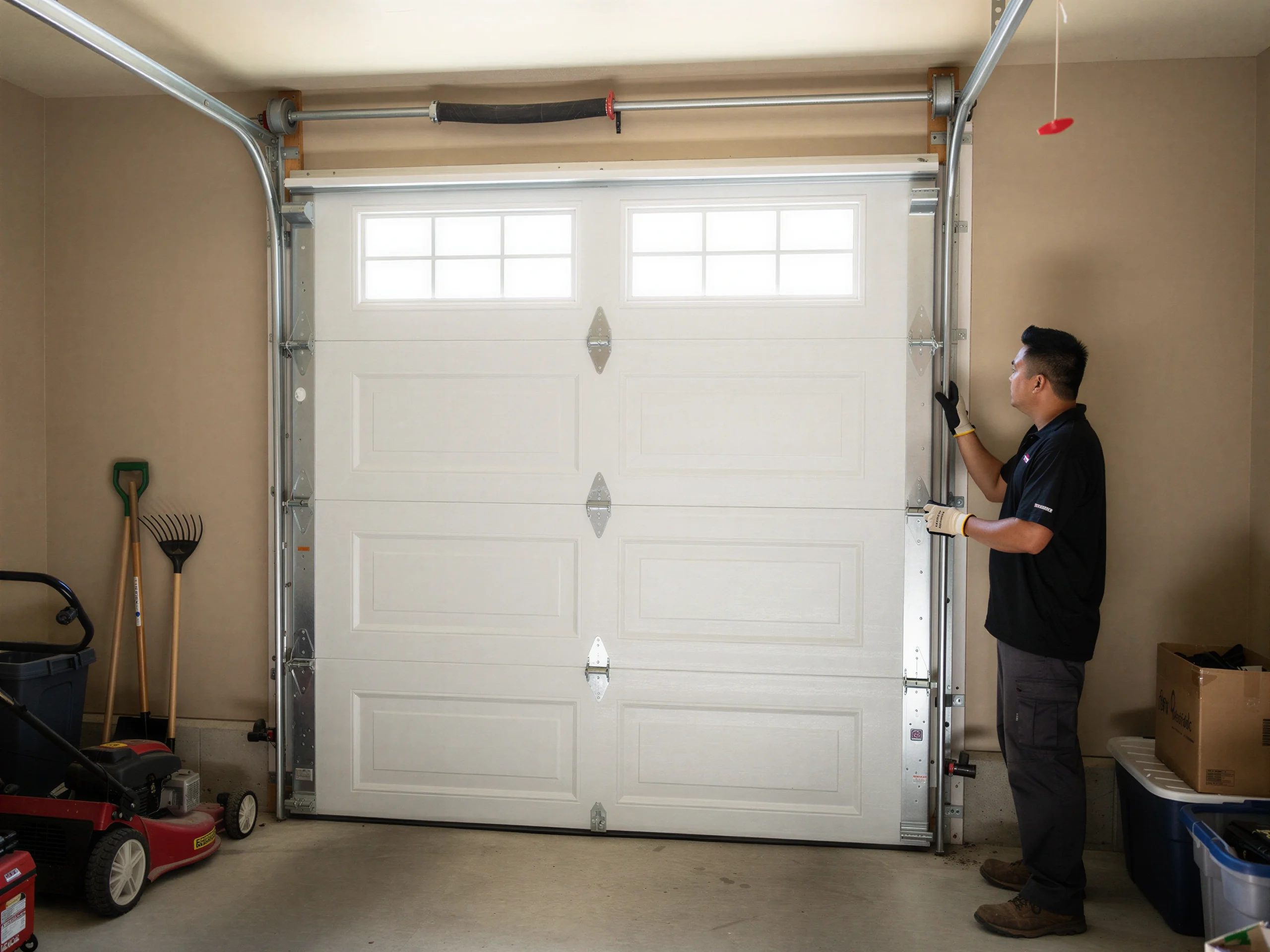
A cable repair is a spring-adjacent job, not a quick swap, because the cable only does its work when the torsion spring above it is holding the correct tension.
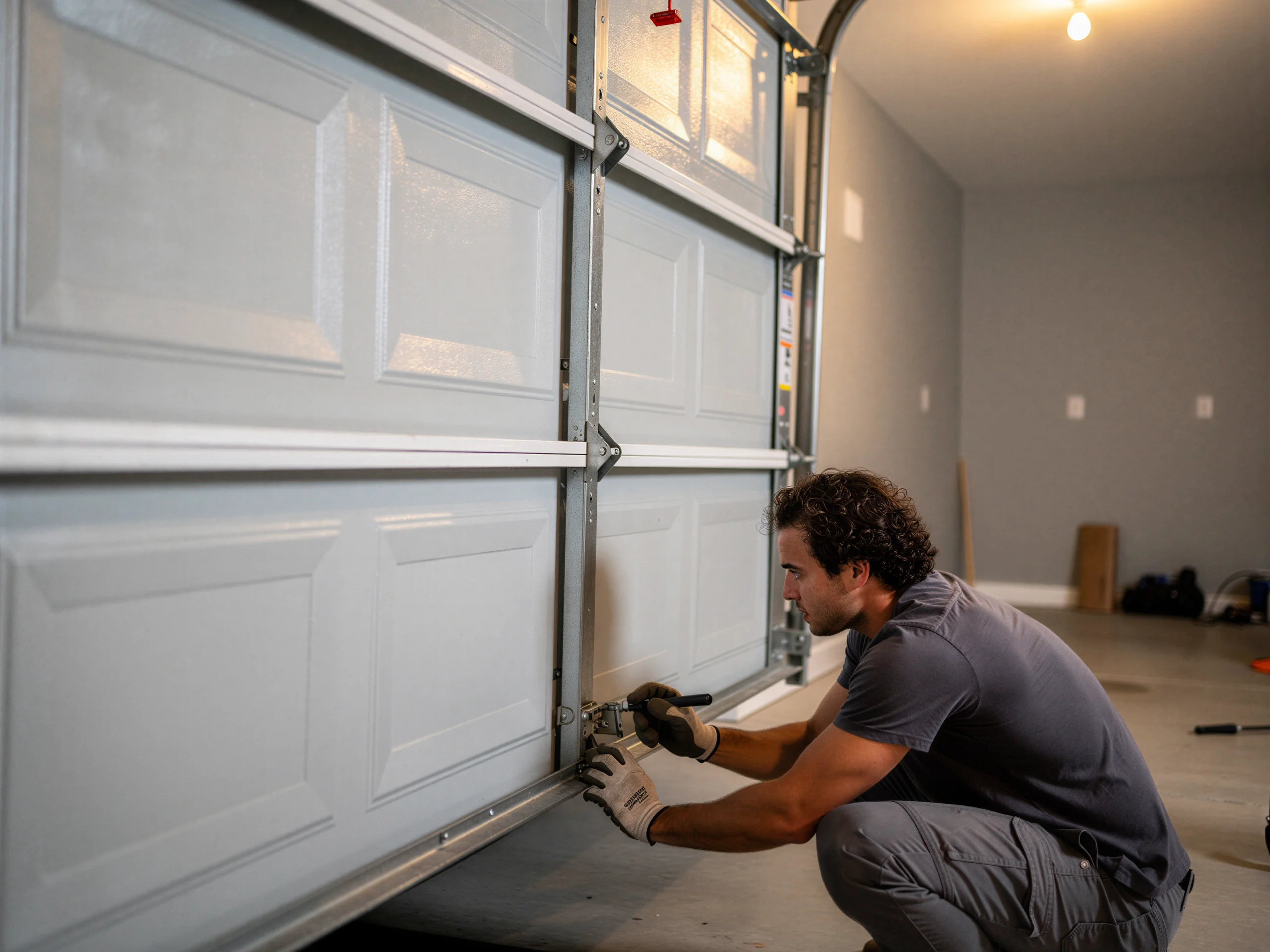
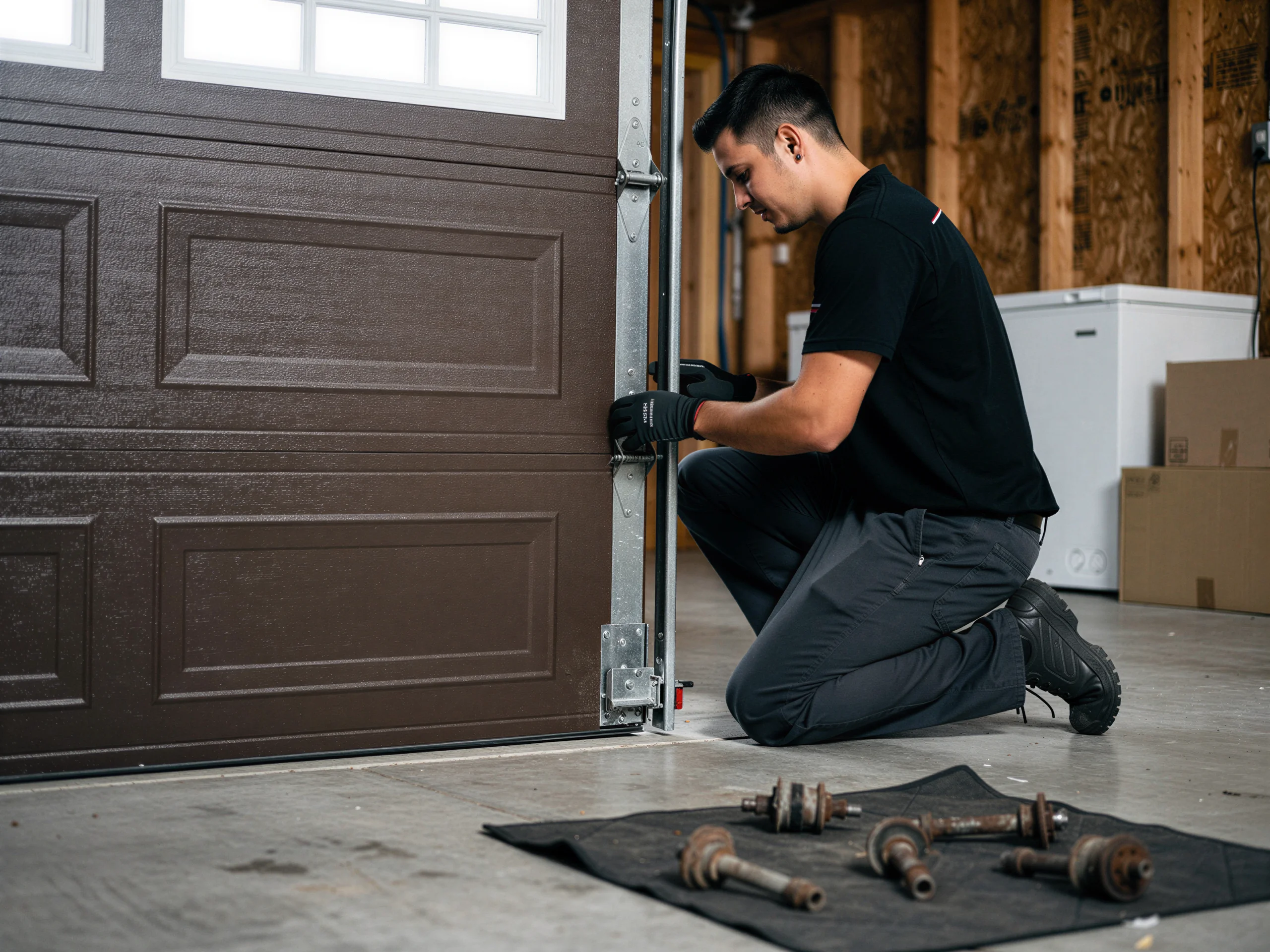
We unwind the spring with winding bars, release tension safely, pull the old cable off the drum and the bottom bracket, and run new aircraft cable sized to the door's weight. On a two-car door that's usually two cables working together, and if one has frayed, the other is close behind it from the same miles of cycling, so we check both before we close the job out.
Alignment at the drum matters as much as the cable itself - a cable wound unevenly will walk off the drum again within a season no matter how new it is. We also check the bottom bracket, since a cable that's jumped the drum has often already chewed up the bracket slot it rides in.
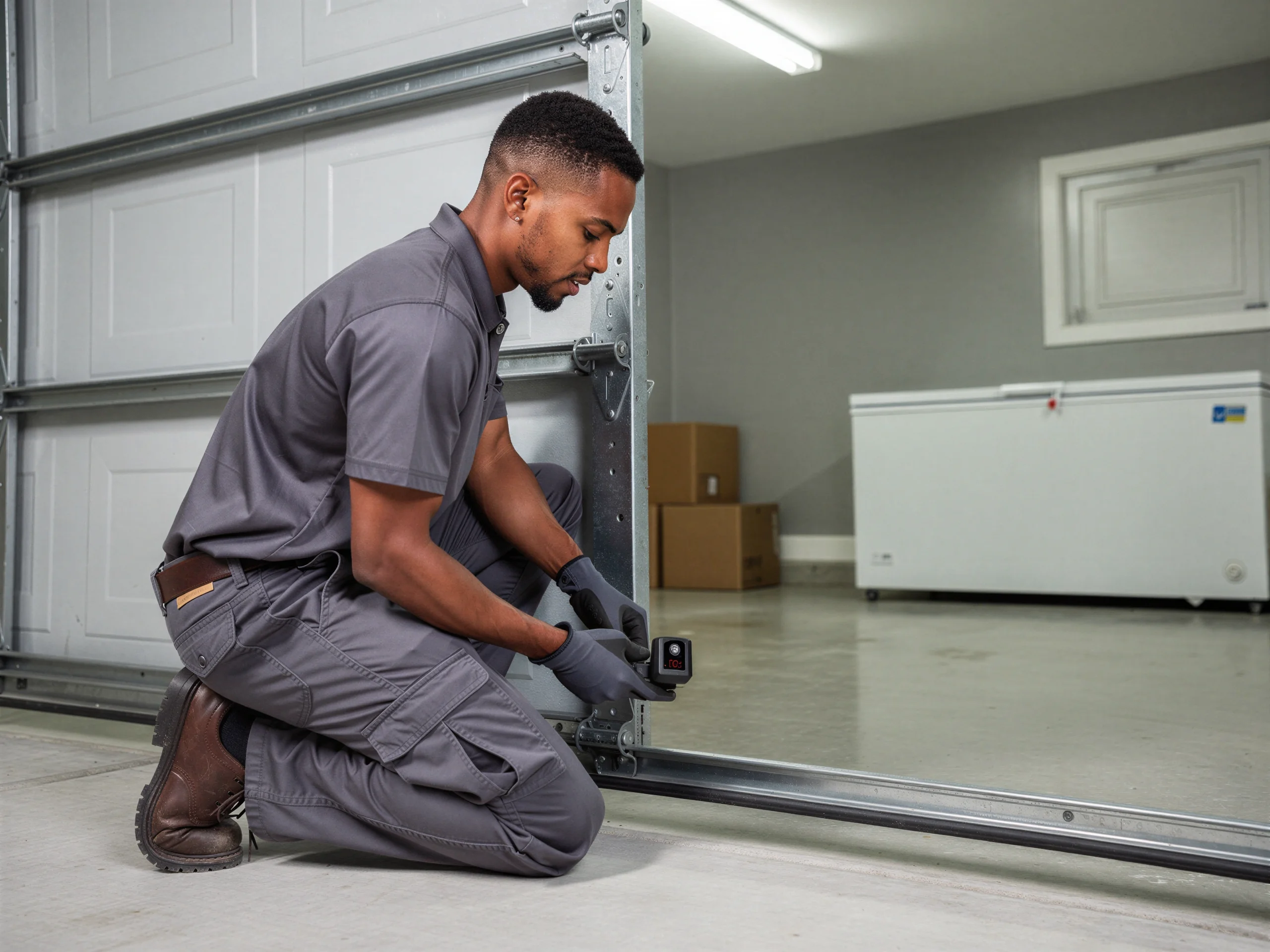
Expect the truck for a standard two-cable job to be on site long enough to do the tension release, swap, and a full cycle test under load - we don't call it done until the door runs the full track smoothly at least twice with the opener disconnected.
If the drum itself is grooved or the bottom bracket is bent, that gets replaced in the same visit rather than scheduled separately, since reusing a damaged bracket just sets up the next failure.
Warning signs
Most calls start the same way: the door hangs crooked, one side low, or it simply won't move and the opener strains against it. A visibly frayed cable - that fuzzy, uneven look where strands have separated - is the clearest sign, usually near the bottom bracket or where it wraps the drum.
Sometimes the cable has already let go and you'll see it coiled loose on the floor or hanging from the drum with the door stuck wherever it was last moving.
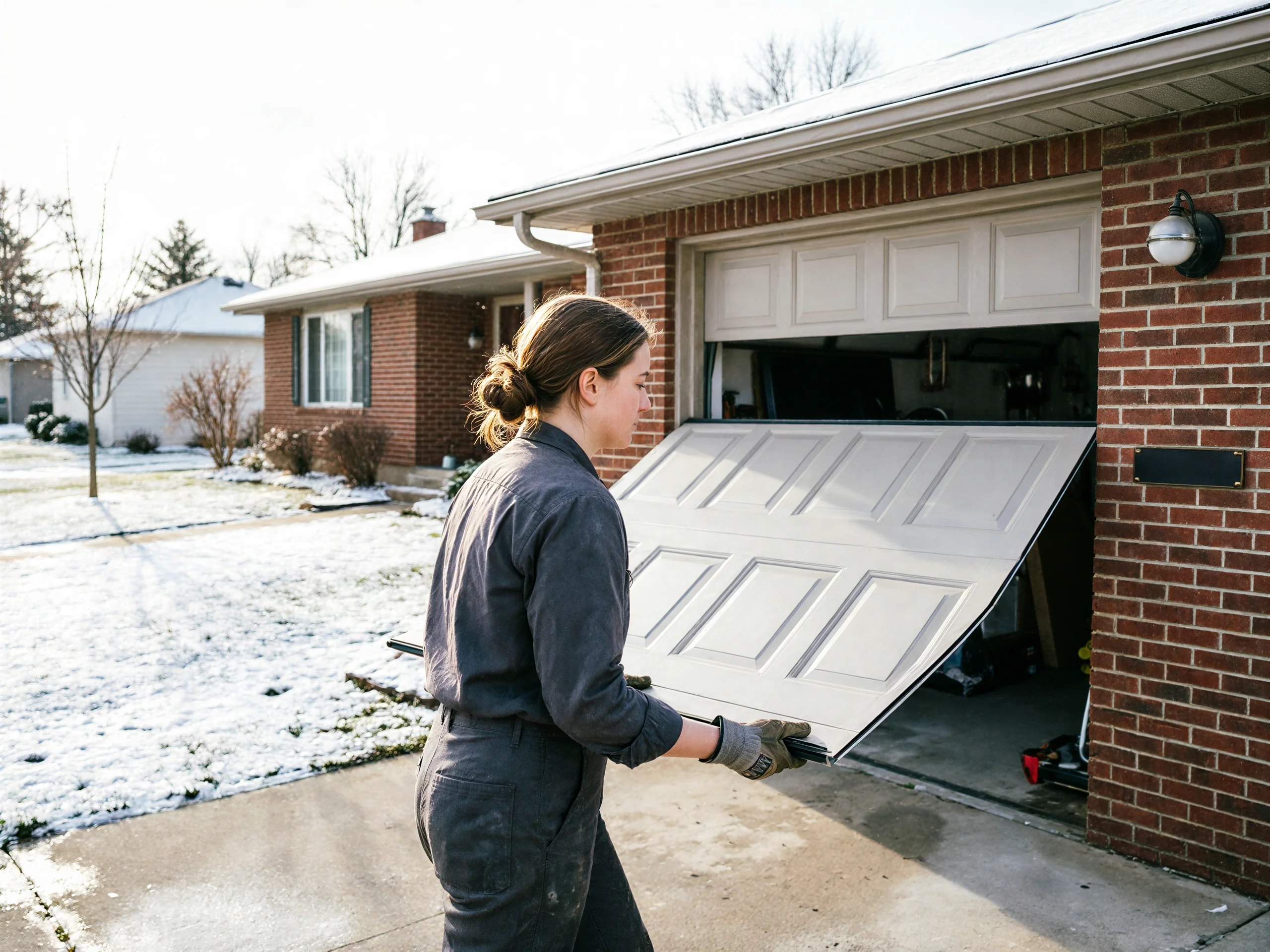
A door that drops suddenly on one side while opening, rather than easing down, is a cable failure in progress, and running the opener again at that point risks bending the track or cracking a panel.
If the door was fine yesterday and today it's crooked or stuck, that's almost always cable, not opener - the opener motor rarely fails that fast or that visibly. We ask that homeowners not force a stuck door by hand or with the opener once it's clearly off-track; that's how a cable repair turns into a track and panel repair.
On the truck
We stock galvanized aircraft cable in the diameters that match standard residential torsion setups, plus the drums, bottom brackets, and cable clips that commonly go with a failed cable.
For the housing stock in this service area - built mostly between 1938 and 1991 with a median year around 1965 - that means we carry hardware sized for both older low-headroom torsion systems and the newer extension-spring conversions some owners have put in since.
What we don't stock on the truck are cables for commercial or high-cycle doors, or specialty drums for doors outside standard residential sizing - those get special-ordered, and we'll tell you that up front rather than make you wait at the curb while we guess.
Clips and fittings are the one thing that look interchangeable but aren't; using the wrong clip on a cable is a common DIY mistake that leads to the cable slipping loose again within weeks.
Local causes
The service area runs from older, established neighborhoods to newer builds, and the housing stock here - median year 1965, with most of it going up between 1938 and 1991 - means a lot of doors are still running on original or first-replacement torsion hardware that's well past its cycle life. Cable wear is a function of cycles and weather, not calendar age alone, and this area sits in a cold, severe climate band: winter cold stiffens lubricant, shrinks metal tolerances slightly, and puts more load on a cable during the first cold-morning cycles of the day than it sees the rest of the year. That combination - older torsion drums paired with hard winters - is why we see more cable failures here in the first cold stretch of the season than in mild months. Household income across the area runs well above the regional median, and what that tends to mean in practice is more owners replacing both cables and the spring together rather than patching one side, since they're not trying to stretch a five-year-old repair another five years on a door that's already near 1960s vintage.
Questions
You can, but we usually recommend both. Cables wear from the same cycles and the same tension, so if one is frayed the other is close behind it. Replacing just one often means a second service call within a year for the matching cable - doing both now costs less than two separate visits.
No, but they're connected. The cable rides on a drum that's driven by the torsion spring. A broken spring can snap a cable under sudden load, and a frayed cable left too long can damage the drum the spring depends on. We check both whenever we're called for either.
Cold stiffens the door and the lubricant on moving parts, so the first few cycles each cold morning put more strain on a cable that's already worn thin. In this area's cold, severe winters, that extra morning load is often what finally snaps a cable that's been fraying for a while.
Explore more
Ready when you are
Novi Garage Door Pros repairs and installs garage doors, springs and openers in Novi, MI and the surrounding area.