
Springs sized to real weight
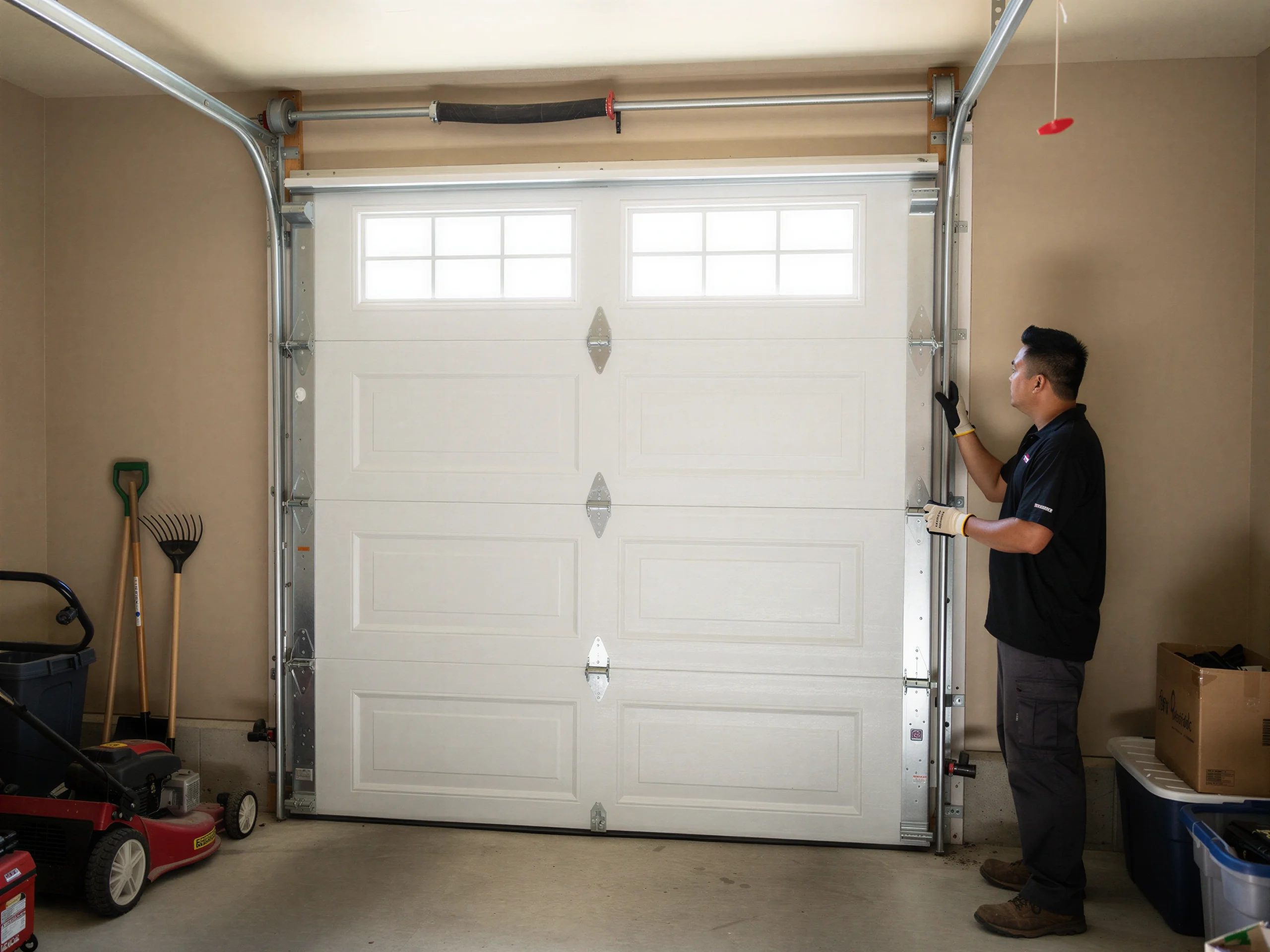
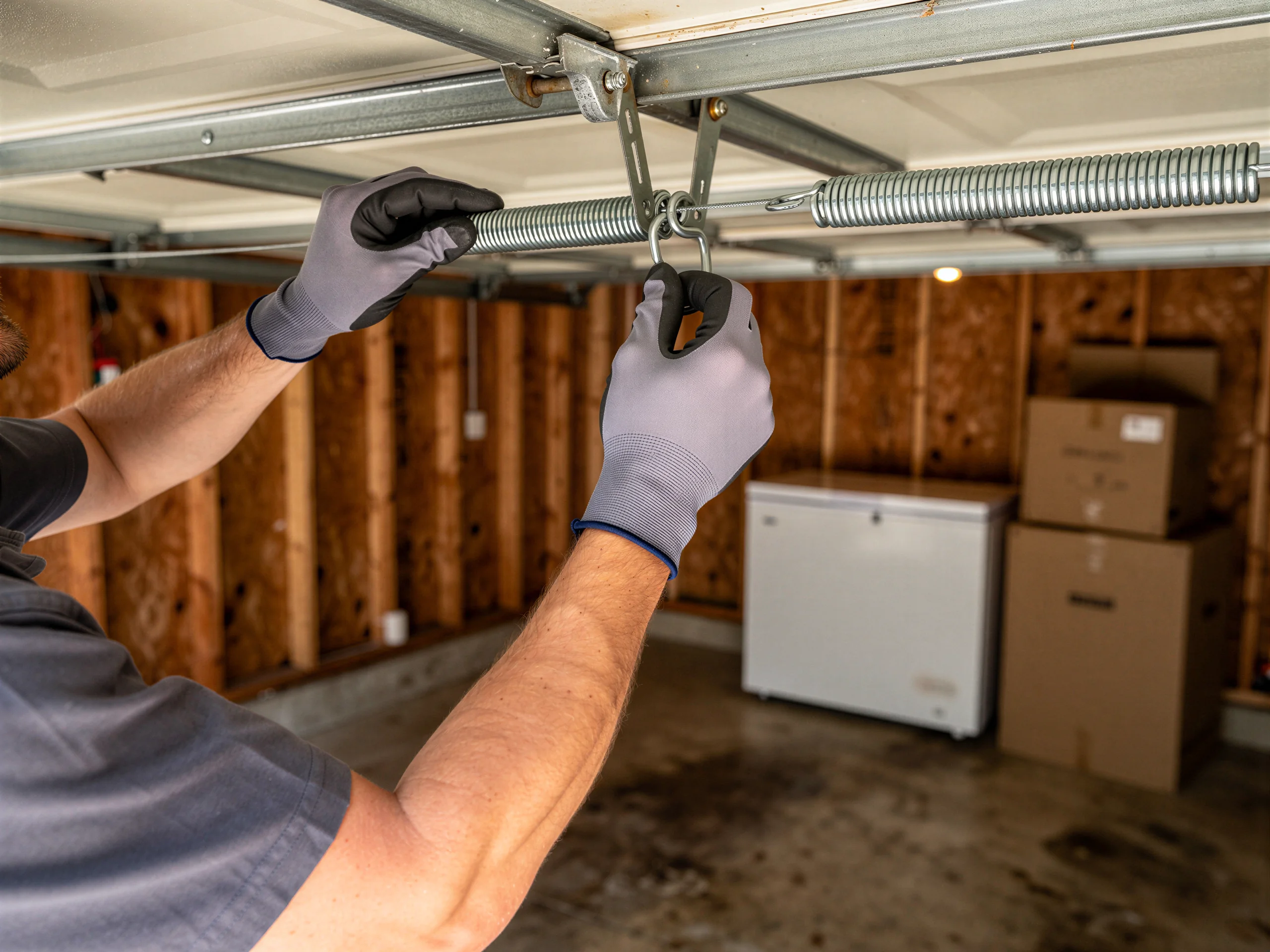
Torsion springs go in sized to the actual door weight, not a generic one-size estimate, because an undersized spring on a heavier insulated door is the single most common callback we see on homes that had a DIY install.
Novi, MI
Replacing a garage door on a Novi house built between 1938 and 1991 means matching the opening, the track, and a door rated for our severe cold winters.
The repair
Most of the houses we get called to in Novi went up somewhere between 1938 and 1991, with the bulk of that stock dating to the 1960s and 70s across the 34 named subdivisions in this part of the county.
That matters for an install because openings from that era were framed for lighter, uninsulated doors - single layer steel or even wood - on track and header hardware sized for less weight. Swap in a modern insulated door without checking the jamb and header first, and you end up fighting a door that binds on the track or an opener that's undersized for the new weight.
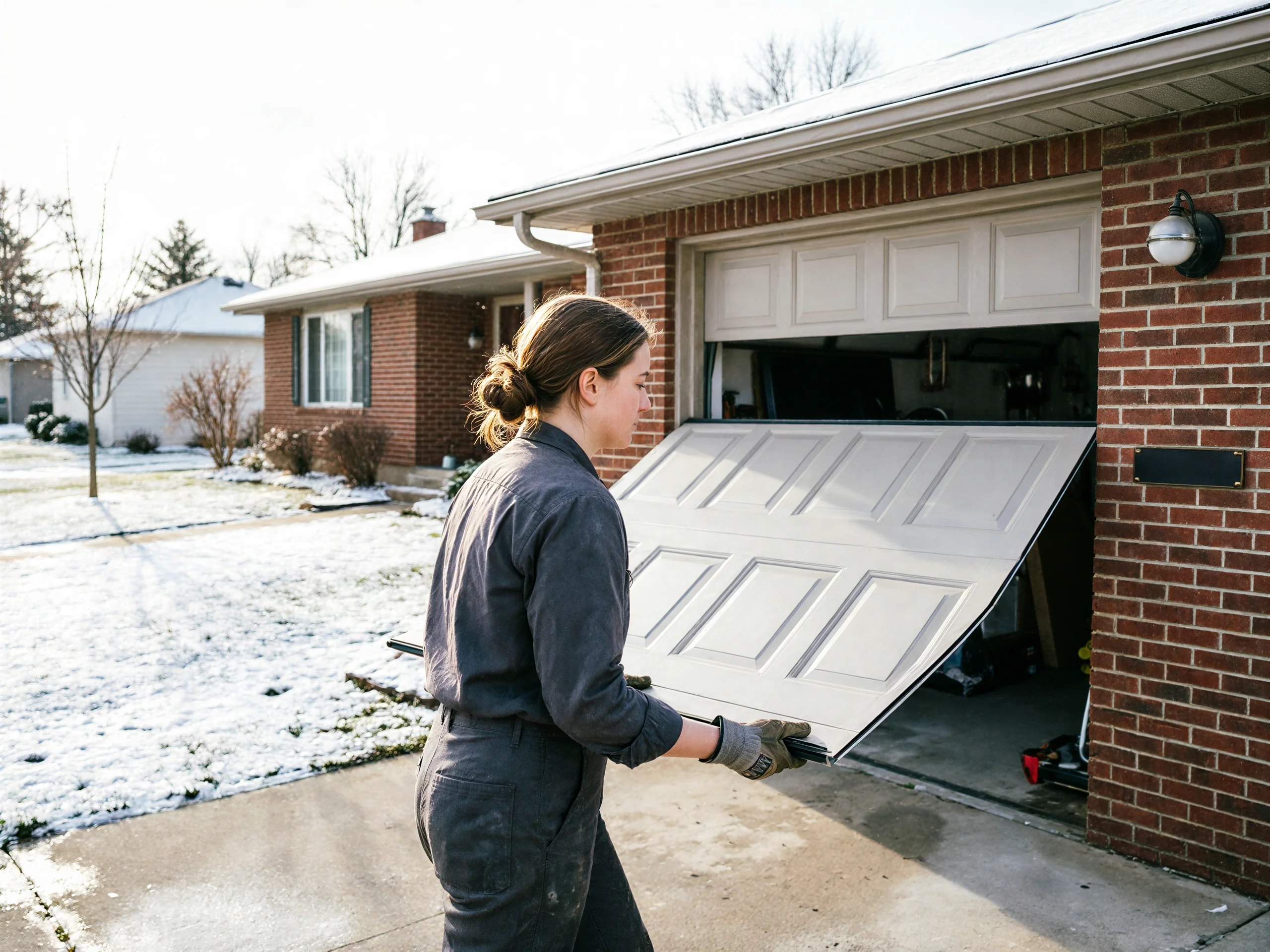
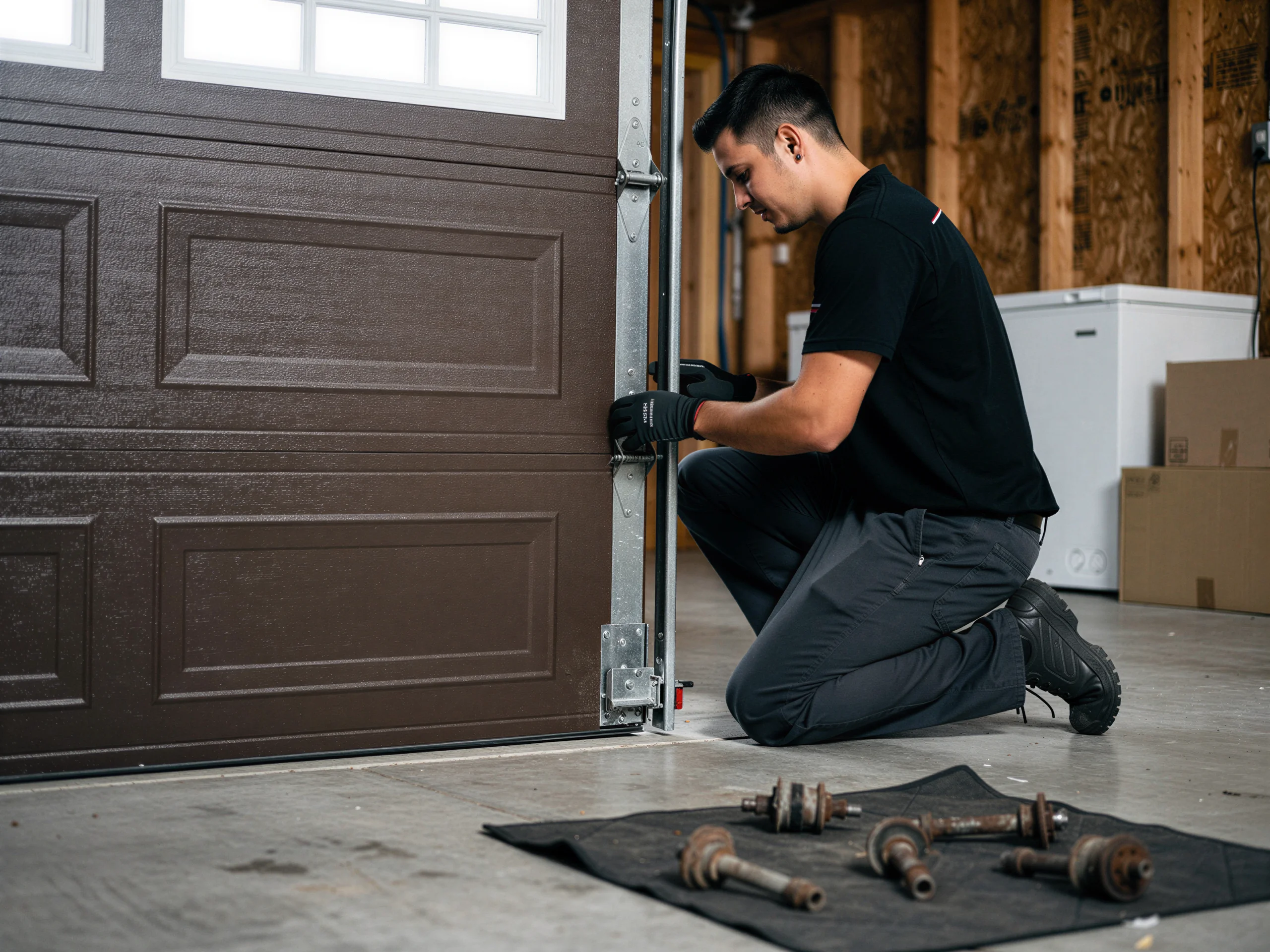
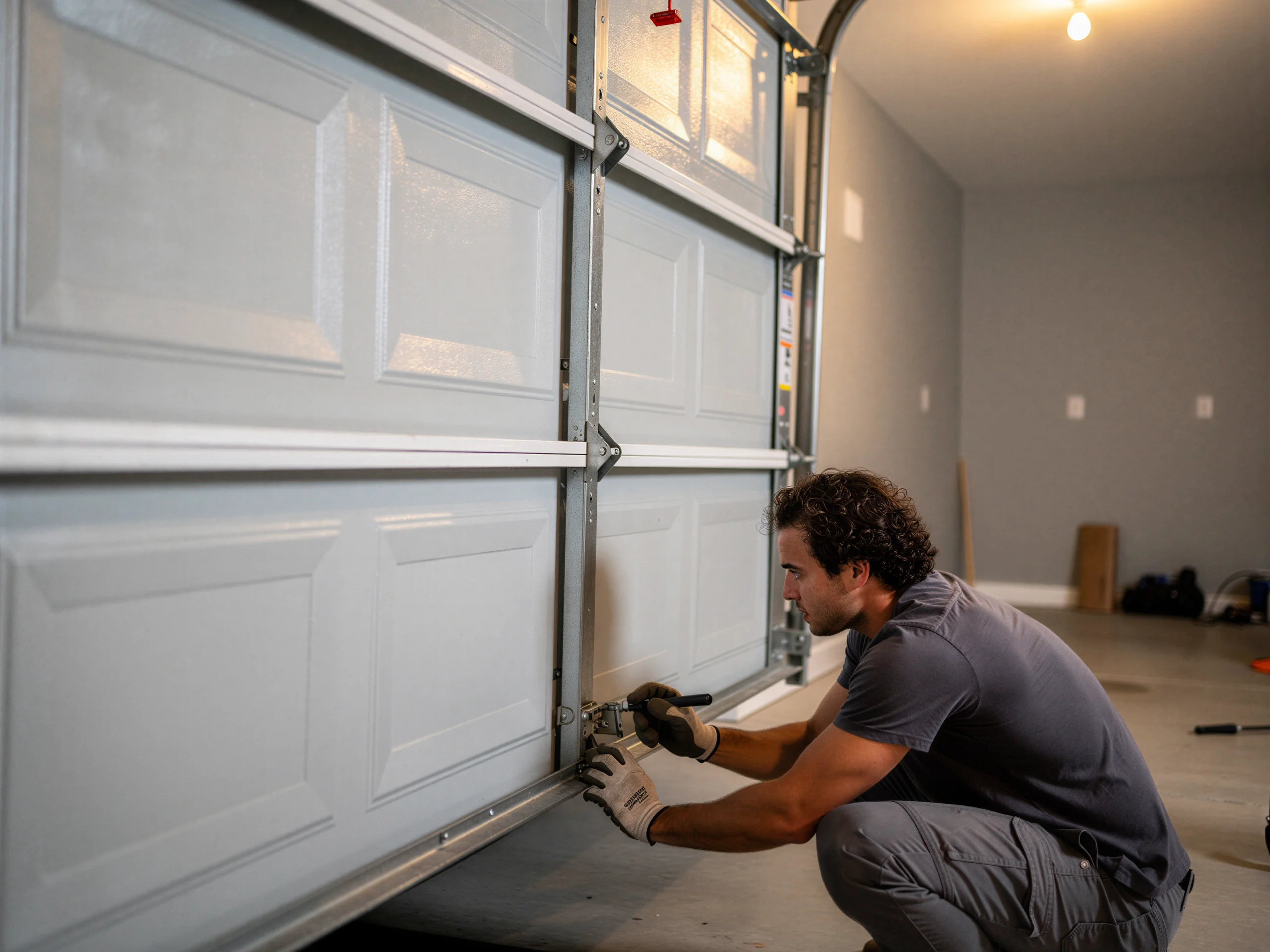
A proper install on one of these houses starts with pulling the old door and track completely, checking the header for rot or settling (common once a house passes the fifty-year mark), and confirming the opening is square before anything new goes up.
If the jamb has shifted, we shim and reset it rather than force a door to fit an opening it wasn't built for. On a straightforward swap with a square opening, most jobs run a half day. Add header repair or track relocation and it runs longer - we tell you that up front, not after we've started cutting.
Warning signs
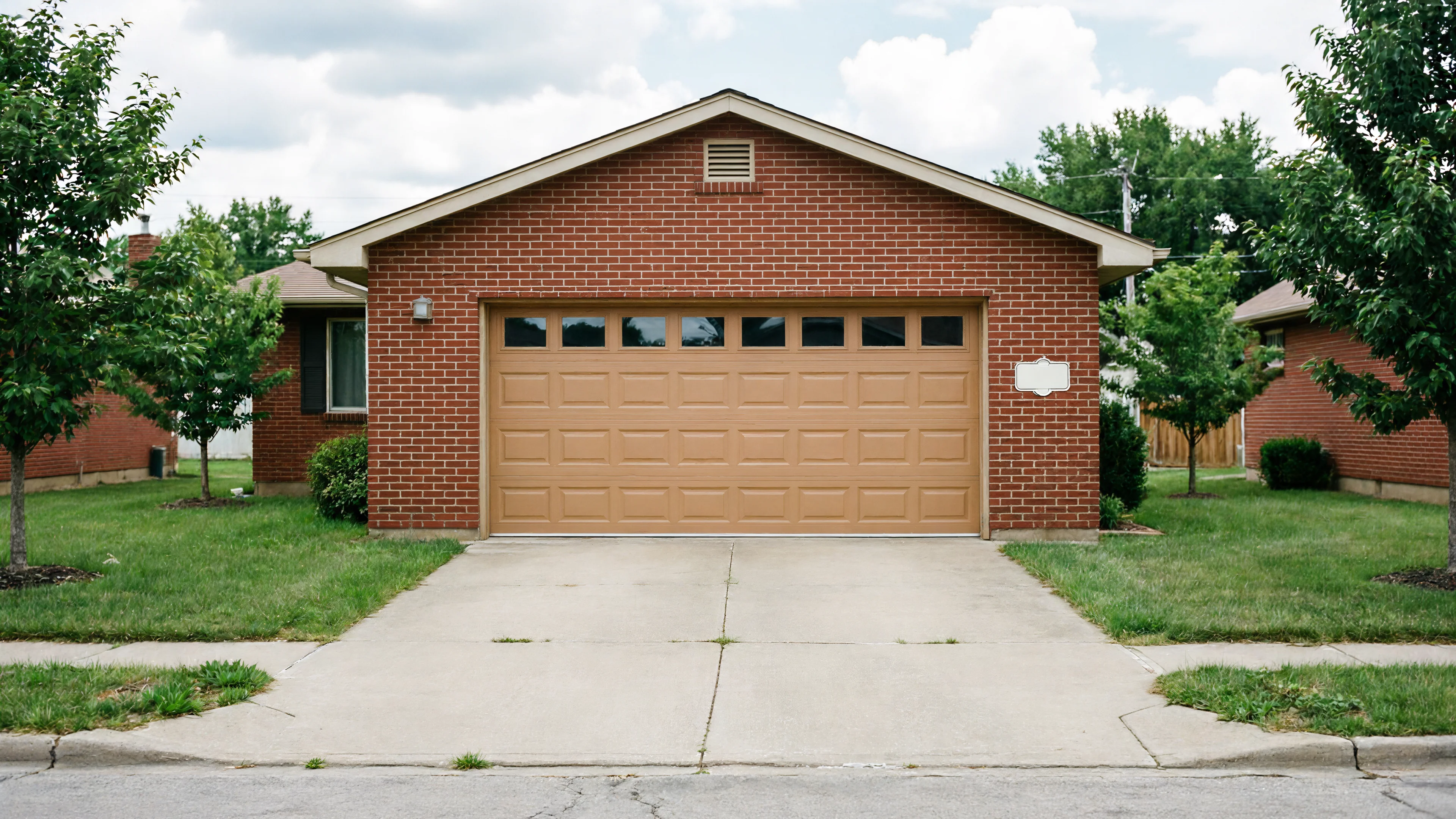
If your door is original to a house built in the 1960s or 70s, you're likely looking at a single-layer steel panel with no insulation core, riveted hinges that have worked loose over sixty-some winters, and a track that's been reshaped by hand more than once. Doors from that era also tend to run on older low-headroom track, which limits what opener and spring setup can go in without modification.
On newer builds in the same neighborhoods - closer to the 1991 end of our local housing range - you're more likely seeing a door that's structurally fine but thermally weak: no insulation, no thermal break at the bottom seal, and a frame that lets cold air track straight into an attached garage. Given our climate band - severe cold, not just cold - that shows up as a garage that never gets above the low 40s in January and a door skin that sweats and rusts from the inside out. Either way, the fix isn't patching; it's a door built for the opening and the weather it actually sits in.
On the truck
We stock insulated steel sections rated for severe cold climates - polyurethane core, not the thinner polystyrene fill that cracks and loses R-value after a few hard winters.
Torsion springs go in sized to the actual door weight, not a generic one-size estimate, because an undersized spring on a heavier insulated door is the single most common callback we see on homes that had a DIY install.
We also carry low-headroom track kits for the houses built before garages were framed with opener clearance in mind, and weatherstrip and bottom seals rated for sustained sub-zero stretches rather than the standard seal that goes brittle by February.
What we don't stock on the truck: custom wood-clad doors or anything needing a special-order finish - those are special order through the manufacturer and we'll tell you the lead time before you commit, not after a deposit.
Local causes
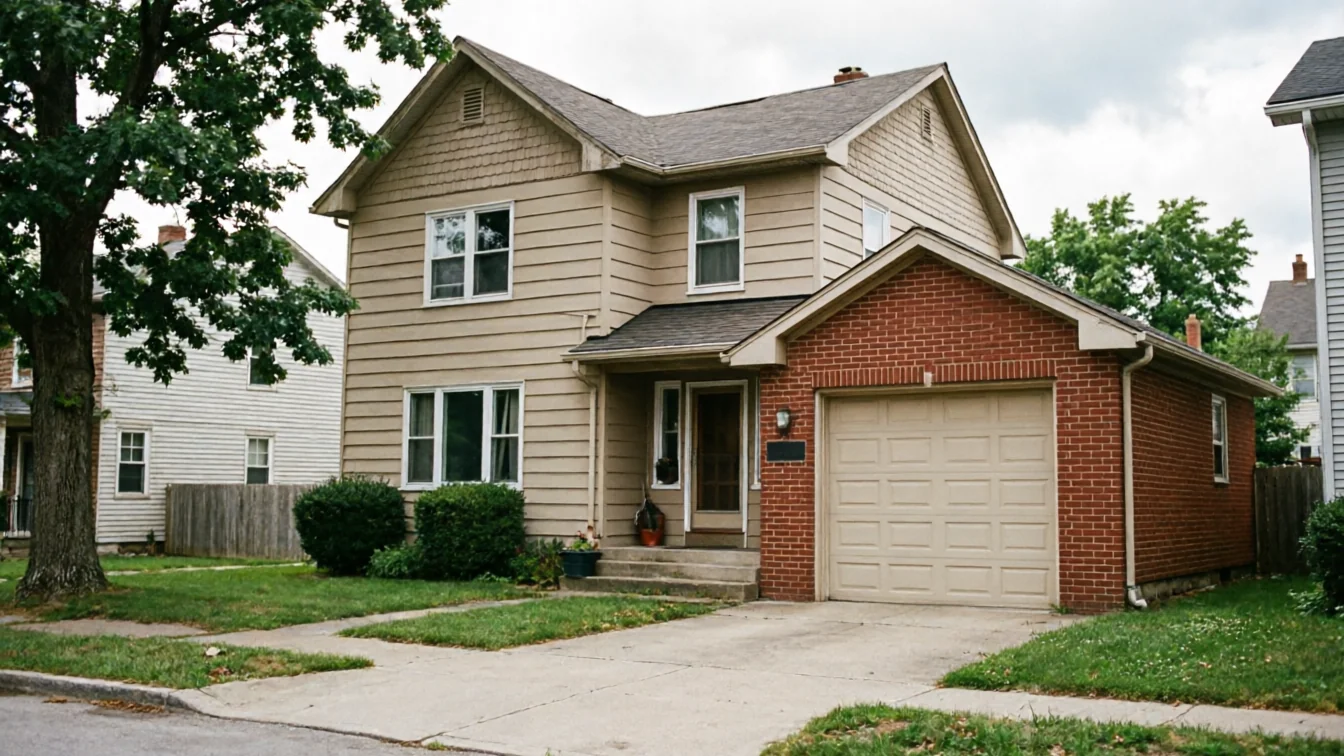
Novi's housing stock runs from 1938 to 1991, with the median landing around 1965 - meaning most of the doors we replace weren't failing from abuse, they were built for a lighter standard and a milder expectation than our winters actually deliver. A severe cold climate band means repeated freeze-thaw cycles on the slab, which shifts the track mounting points over decades even on a well-built garage. That slow shift is why an old door starts binding on one side years before it fails outright.
It's also why we don't treat installation as a drop-in swap. A door sized and insulated for this climate, set into a track that's been reset to square, outlasts a door that just happens to fit the hole in the wall. We see this pattern across the area - not just in Novi proper but in the same 1960s-70s stock in Wixom and Walled Lake a few miles out.
Questions
If the door is original to a house built before the 1990s, it's single-layer steel with no insulation and probably riveted hinges that have loosened over decades. A repair can fix a broken spring or a bent panel, but it won't fix a door built for a milder climate than ours. We'll tell you honestly which side of that line you're on before we quote anything.
Usually yes, but we check the header and jamb first. Houses from the 1960s and 70s were often framed for lighter doors, so we confirm the opening is square and the header can carry the added weight of an insulated panel before we order anything.
A straightforward swap on a square opening runs about half a day. If we find a shifted header or need to relocate track - common on houses past the fifty-year mark - it takes longer. We flag that before starting, not after.
We carry standard insulated steel sections and low-headroom track kits for older openings. Custom wood-clad or special-finish doors are special order through the manufacturer, and we'll give you the real lead time up front rather than guess.
Explore more

Ready when you are
Novi Garage Door Pros repairs and installs garage doors, springs and openers in Novi, MI and the surrounding area.