What to Check
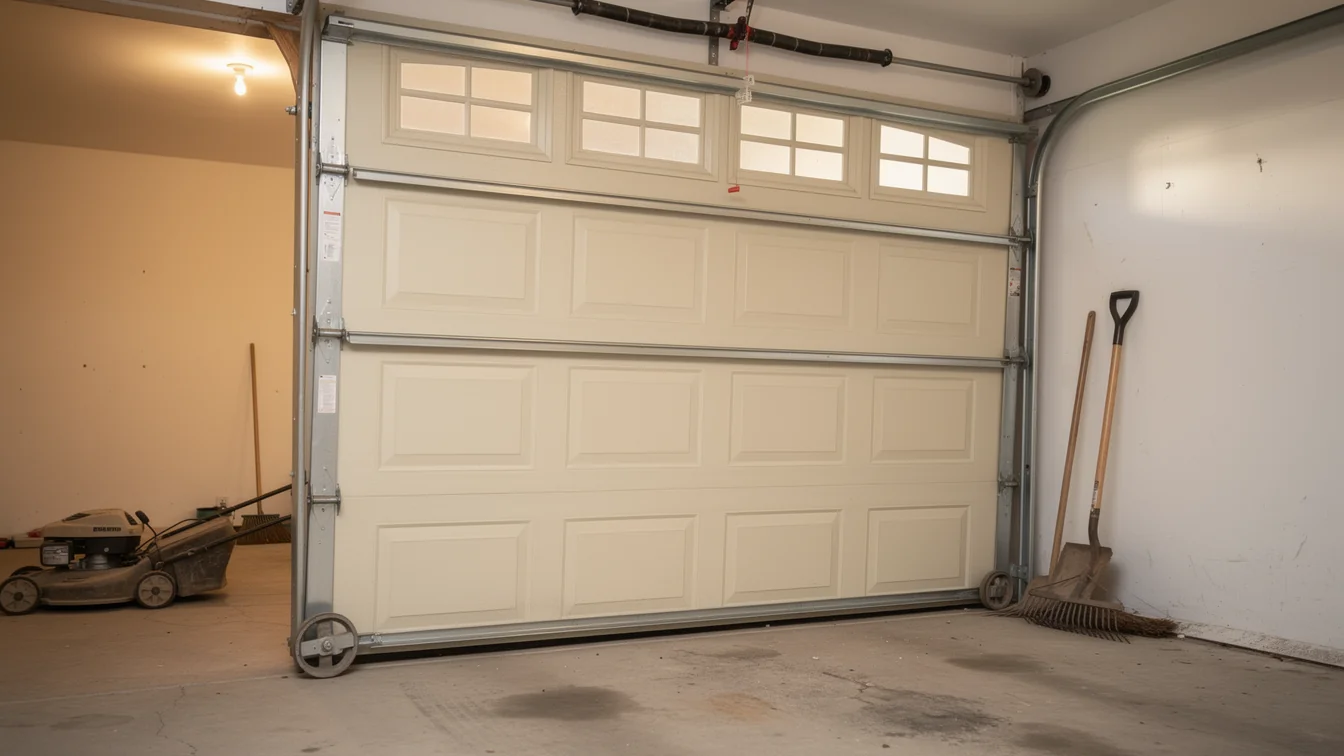
Start at the rollers. On a door built for a house from the 1960s or 70s - which describes most of the stock in Novi's 34 named subdivisions - you're likely looking at steel rollers on a track that was never upgraded to nylon. Steel rollers wear the inside edge of the track faster, and once that edge wears, the roller rides up and out instead of staying flush. Look for a shiny groove worn into the track rail about shoulder height - that's the tell.
Next check the track brackets where they bolt to the frame. Houses from this era (median build year 1965 per local housing data) often have the original wood jamb, and fifty-plus years of seasonal wood movement loosens those lag bolts. A loose bracket lets the whole track rack sideways under the door's weight.
Last, sight down the track itself from the floor. A gap between the roller and the rail, or a track that bows away from the wall partway up, means something already shifted. Don't run the opener again until you've looked - a door that's already riding wrong will pull itself the rest of the way off with the next full cycle.
The Problem
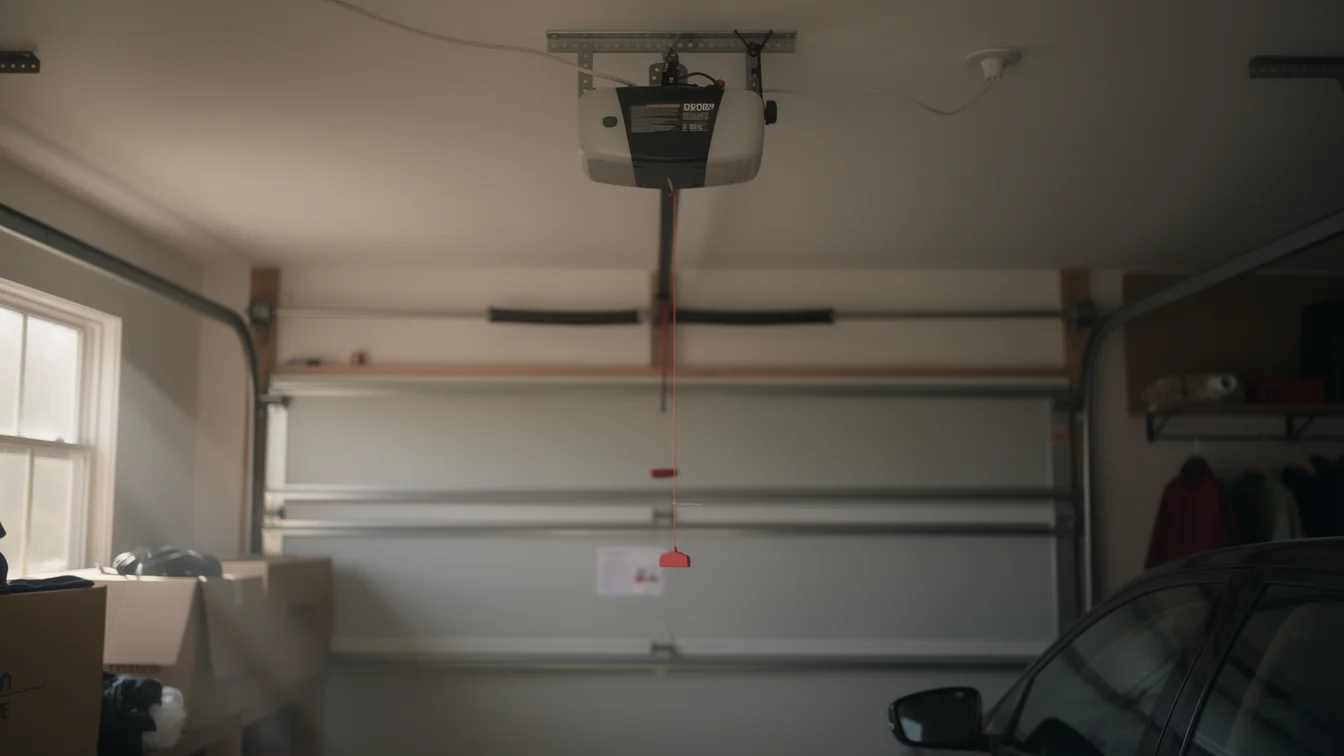
A garage door goes off track almost always because one side moves and the other doesn't. That's a balance problem before it's a track problem. On the older torsion and extension spring setups common on houses built before the 1990s, a spring that's lost tension on one side lets that side of the door drop a fraction faster on every cycle. Over months, the cables don't play out evenly, and the rollers start fighting the rail instead of riding in it.
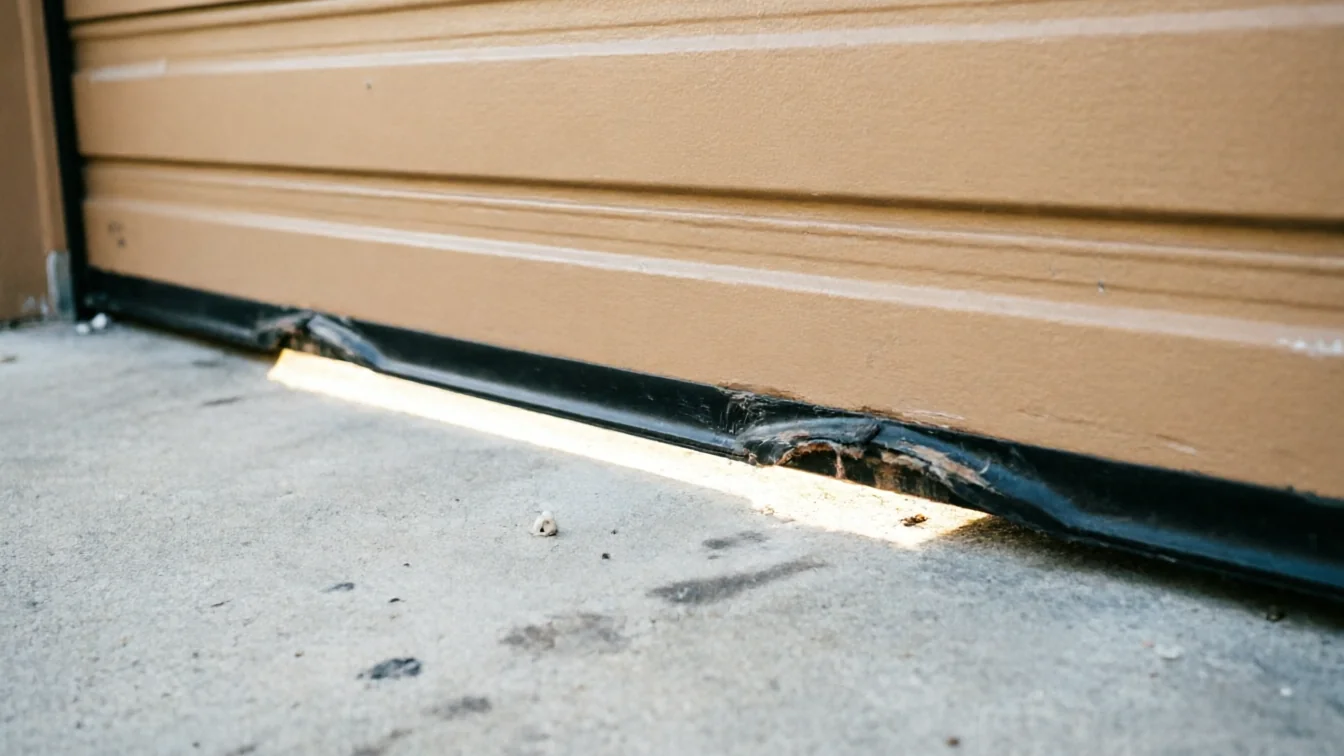
The other common cause is a bent track, usually from a car bumper tapping it or someone hanging storage weight off the horizontal rail - which is not what it's built to carry. Once a track bends even a quarter inch, the roller has to climb that bend every single pass, and it eventually jumps the rail entirely.
Here's the honest limit: if the track is bent in more than one place, or the bracket holes have stripped out of a wood jamb that's soft from age, replacing the track section costs less than trying to coax the old one straight. We'll tell you when that's the call instead of billing for a repair that won't hold.
Season by Season
Novi sits in a cold, severe climate band, and that shows up in the tracks twice a year, not once. In winter, grease on the rollers and track thickens in the cold, which makes the opener strain to pull the door through the last foot of travel - the exact moment a slightly bent track or a weak spring shows itself, because the extra resistance is what finally lets the roller jump the rail instead of riding through.
Spring brings the opposite problem: ground movement from the freeze-thaw cycle shifts the slab the door frame sits on, by a small amount, but a small amount is enough to twist a track bracket that was already loose. Summer heat does less damage on its own, but it's when old grease dries out completely, so a door that limped through winter on thick grease starts binding dry in July.
Fall is the slow season for this kind of call around here - worth doing the roller and track check before the cold comes back, since a problem caught in October is a fifteen-minute fix and the same problem caught in January, with the opener straining against cold grease, is usually a jumped track.
What Local Conditions Do
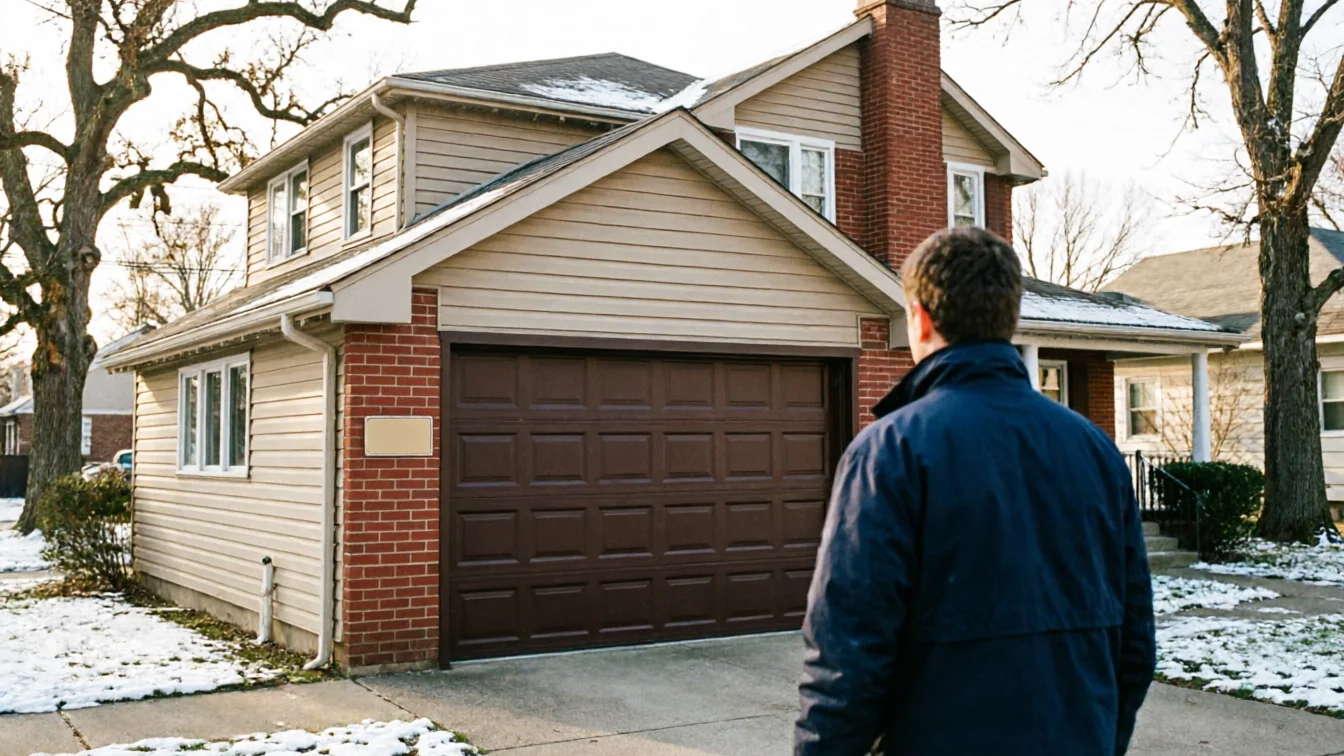
Across the service area there are roughly 101,657 owner-occupied houses, most built between the late 1930s and early 1990s with the bulk from the 1960s and 70s. That matters here specifically because it means most garage doors in Novi are mounted on original or first-replacement track hardware sized for a lighter, often single-layer door - not the heavier insulated doors many owners have swapped in since. A heavier door on an old track and old brackets is more weight riding on the same worn rail, which speeds up every one of the wear patterns above.
The cold-severe climate band adds the seasonal swing on top of that: more freeze-thaw cycles per winter than a milder region sees, and each cycle nudges the slab and frame slightly. None of that is dramatic on its own. It's the combination - older hardware under newer, heavier doors, cycling through real winters - that makes track problems a regular call here rather than a rare one.
Talk to a local pro
Garage door trouble in Novi?
Same-day service with honest, upfront quotes.