Sudden drop from broken spring
A door that drops fast and won't stay up usually means a broken torsion spring; you'll often hear a loud bang from the garage a few hours or days before it fails outright, which is the spring letting go under tension.
Novi, MI
Novi Garage Door Pros repairs torsion springs, openers, and tracks on the 1960s-70s doors common across Novi's subdivisions, built for Michigan winters.
The repair
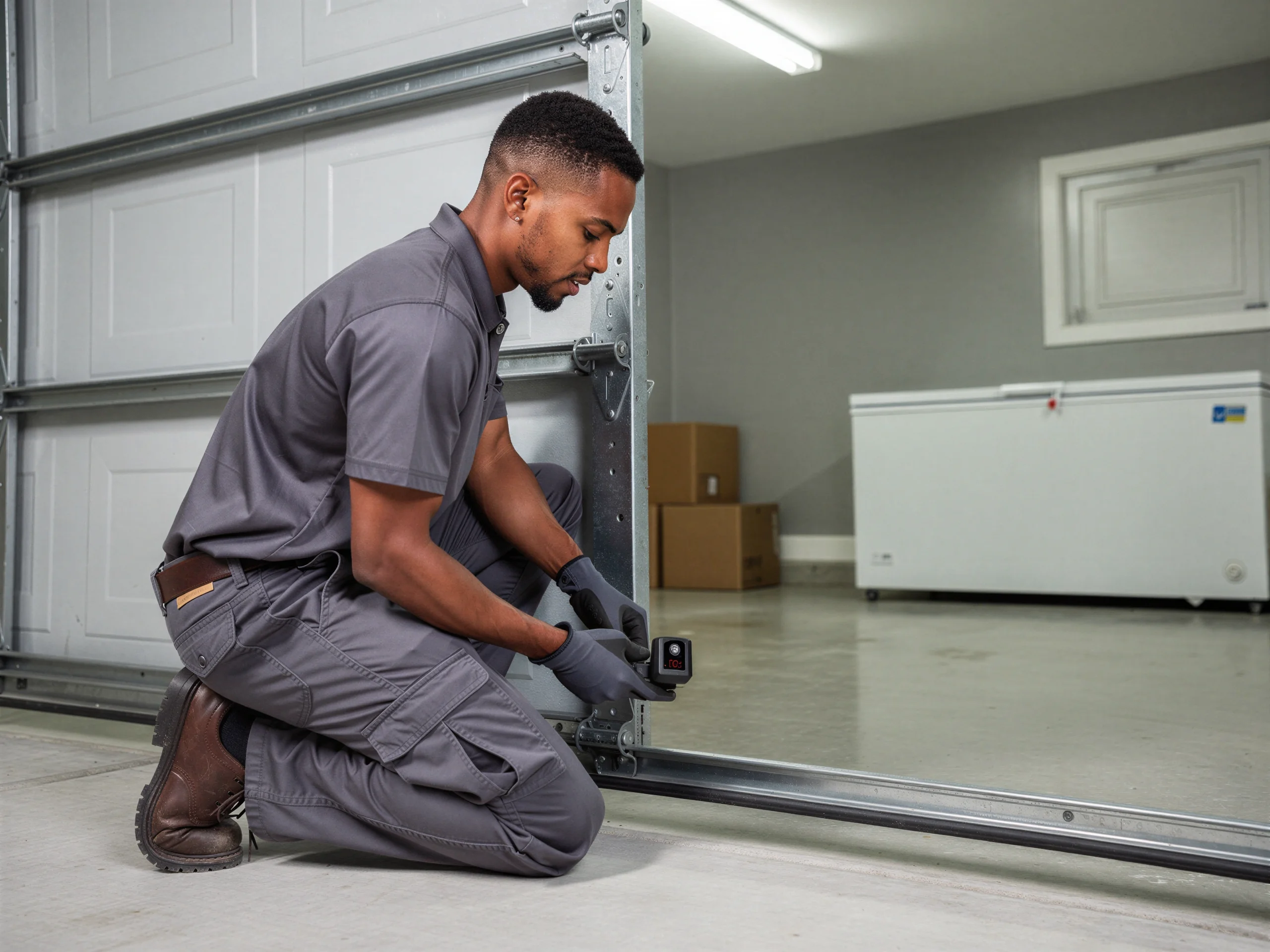
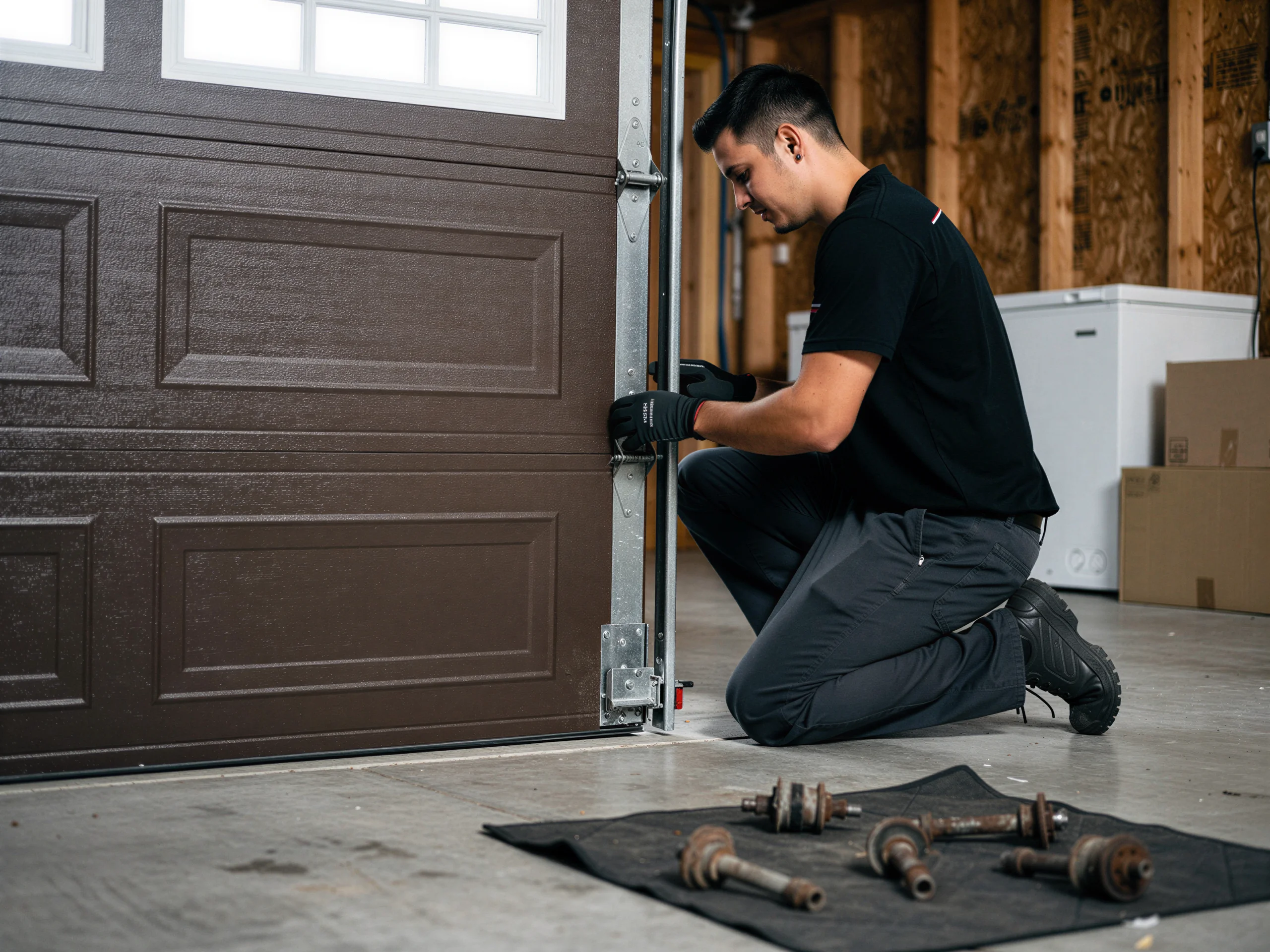
A standard torsion spring or opener call on a Novi garage usually runs the same path: we pull the door down by hand to check balance, look at the spring winding cones for rust or stretch, and test the opener's force settings against what the door actually weighs.
Most of this is diagnostic before it's ever a wrench turning a bolt. On a house built in the 1960s or 70s - which describes a lot of Novi's housing stock - the original hardware is often side-mounted torsion on a single spring, not the dual-spring setup you'd find on anything built after the 1990s.
That changes what we bring off the truck. We don't quote a repair over the phone without seeing the door, because a spring that looks broken is sometimes a cable off the drum, and that's a different job with a different cost.
One honest limit: if the track is bent badly enough that the door walks instead of rolling straight, no spring adjustment fixes that - the track needs replacing, and we'll tell you that up front instead of patching around it.
Warning signs
The door won't open, or it opens a few inches and stops, or the opener motor hums but the door doesn't move - these are the three calls we get most from this area.
A door that drops fast and won't stay up usually means a broken torsion spring; you'll often hear a loud bang from the garage a few hours or days before it fails outright, which is the spring letting go under tension.
A door that opens crooked, with one side higher than the other, points to a spring that's lost tension on only one side of a dual-spring setup, or a cable that's frayed and about to snap. If the opener runs but the door doesn't budge, check whether the trolley is still connected to the arm - on older openers this disconnect sticks after years of the same motion.
None of these are urgent in the sense of a flood or a gas leak, but a door stuck open is a security problem and a door stuck shut with a car behind it is a real inconvenience, so we treat both as same-priority calls.
On the truck
We carry torsion springs sized for the single-spring, side-mounted setups common on Novi doors built in the 1938-1991 range, with the heaviest concentration of that stock dating to the 1960s and 70s median build year for this area.
That means standard 2-inch and 2.25-inch torsion springs, galvanized lift cables, and nylon rollers sized for the narrower track common on original installations rather than the wider track used on new builds.
We also stock jackshaft and chain-drive opener parts, since a lot of these older garages were retrofitted with openers decades after the door itself went in, which means the opener and the door hardware don't always match in age or design.
What we don't stock on the truck: specialty insulated panel sections for doors with a non-standard width, since those are often special-order from the manufacturer and we'll tell you the lead time once we've identified the exact model rather than guess at it.
Local causes
Novi sits in a cold-climate band with severe winters, and that's the biggest single driver of the spring and cable failures we see. Steel torsion springs lose tensile flexibility as temperatures drop, so a spring that's been slowly weakening for years is far more likely to snap on a sub-zero morning than in July. Add in a housing stock with a median build year around 1965 - much of it still running original or first-replacement hardware - and you get a lot of springs that are simply past their rated cycle count going into their coldest season yet. Moisture is the other half of it: condensation on an unheated garage's steel parts during Michigan's freeze-thaw swings accelerates rust on spring coils and cable strands, which is why we see more failed springs in January and February than any other months. None of this is unique to one subdivision - it's a function of age and weather working on the same hardware for decades, across this whole service area.
Questions
Steel springs lose flexibility as temperatures drop, so a spring that's been weakening for years under normal wear is far more likely to fail on a cold morning than in summer. Combine that with a lot of Novi's garages running original hardware from a median build year around 1965, and winter spring failures are the most common call we get this time of year.
We stock torsion springs, cables, and rollers sized for the side-mounted single-spring setups common on houses built from the late 1930s through the early 1990s, which covers most of Novi's housing stock. Non-standard insulated panels on an unusual width are the exception - those are often special order, and we'll confirm lead time once we've seen the actual door.
That's usually a spring that's lost tension on one side, or a frayed cable close to failing, rather than an opener problem. We check balance by hand first, since a door this far out of balance can also strain the opener's drive gear if it keeps running against resistance.
Explore more
Ready when you are
Novi Garage Door Pros repairs and installs garage doors, springs and openers in Novi, MI and the surrounding area.