
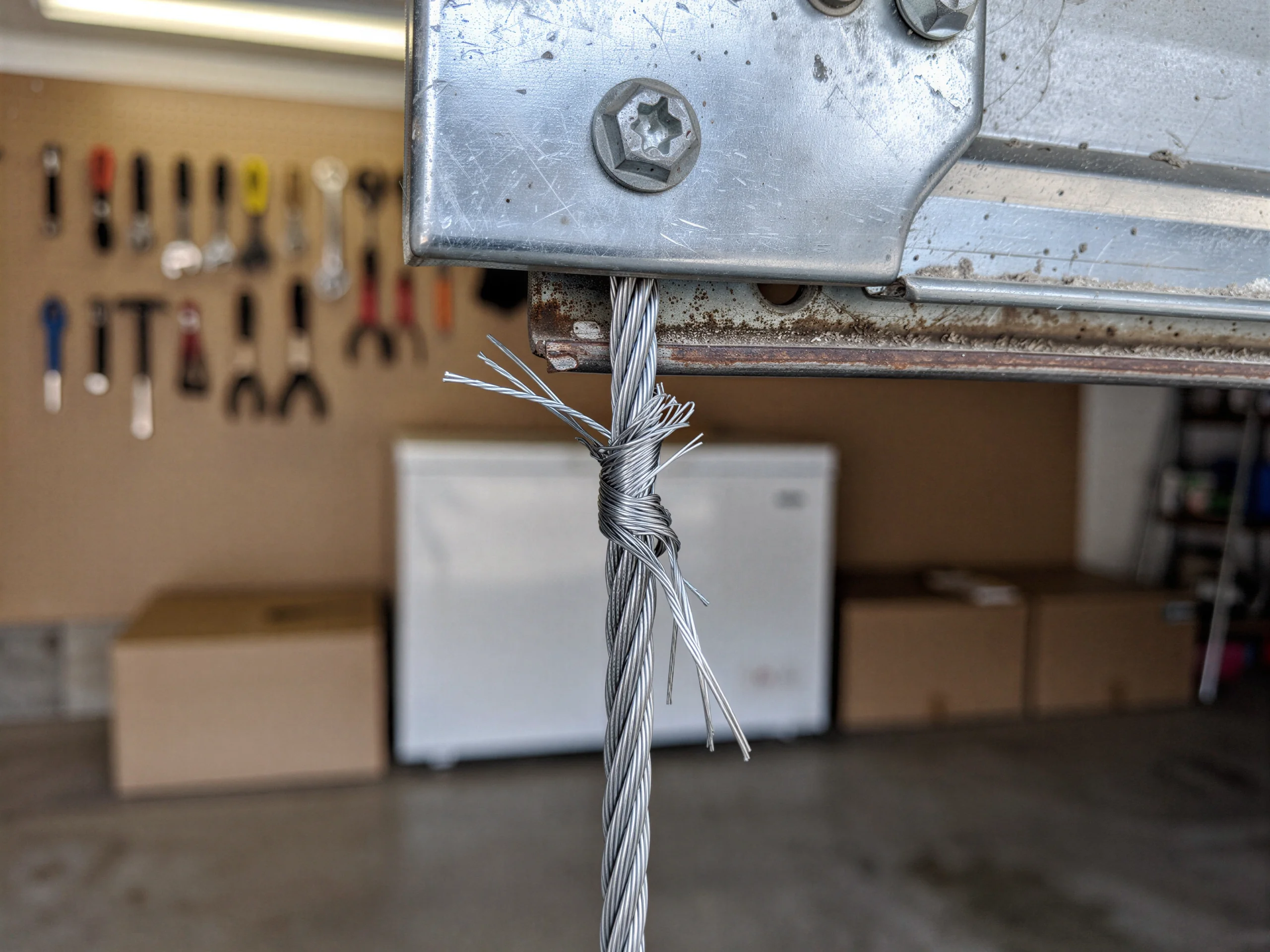
Frayed cable in pulley
On extension-spring systems from this era, you'll often see the frayed cable still threaded through its pulley, or the cable has jumped the pulley track entirely and is binding against the frame.
Milford, Novi
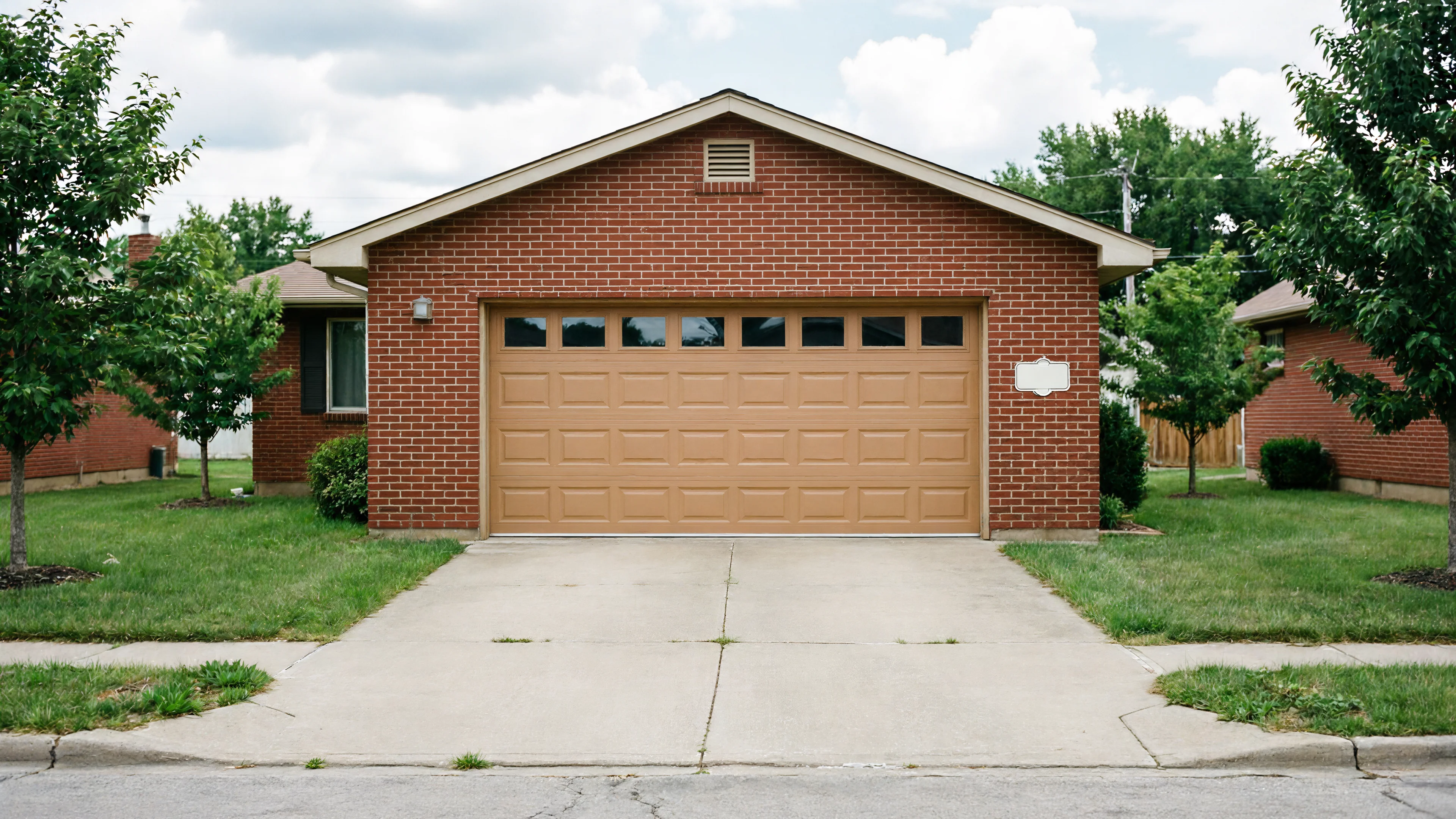
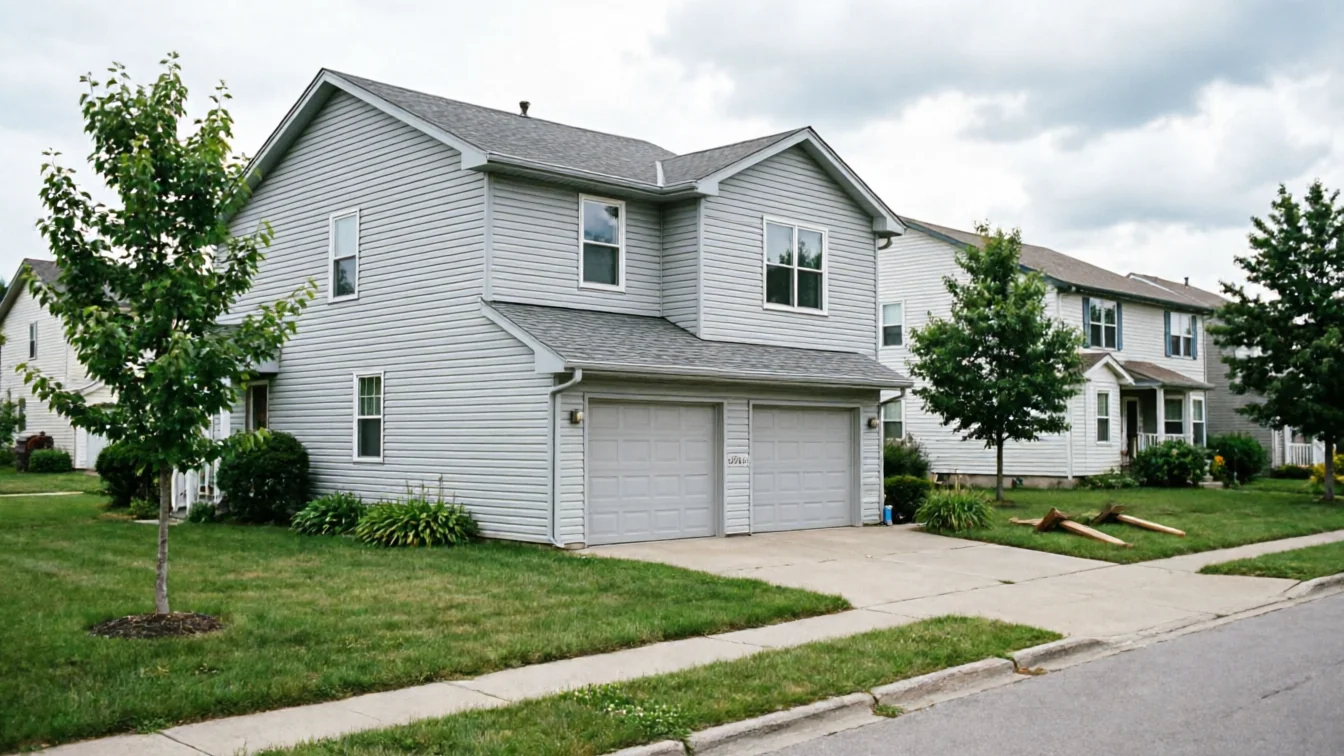
Milford's garage doors mostly went up around 1976, right when steel sectional doors and extension-cable drums became standard. We drive out from Novi to fix the cables that fail.
Job timing
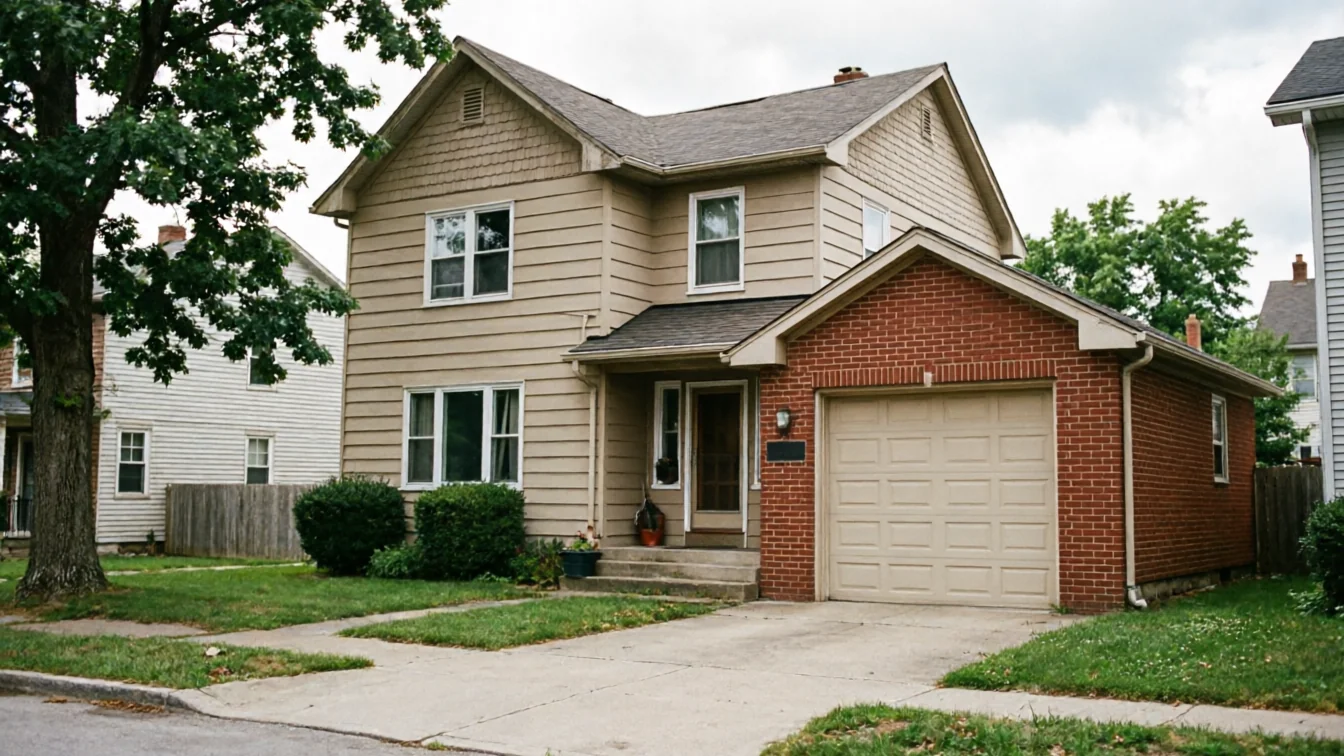
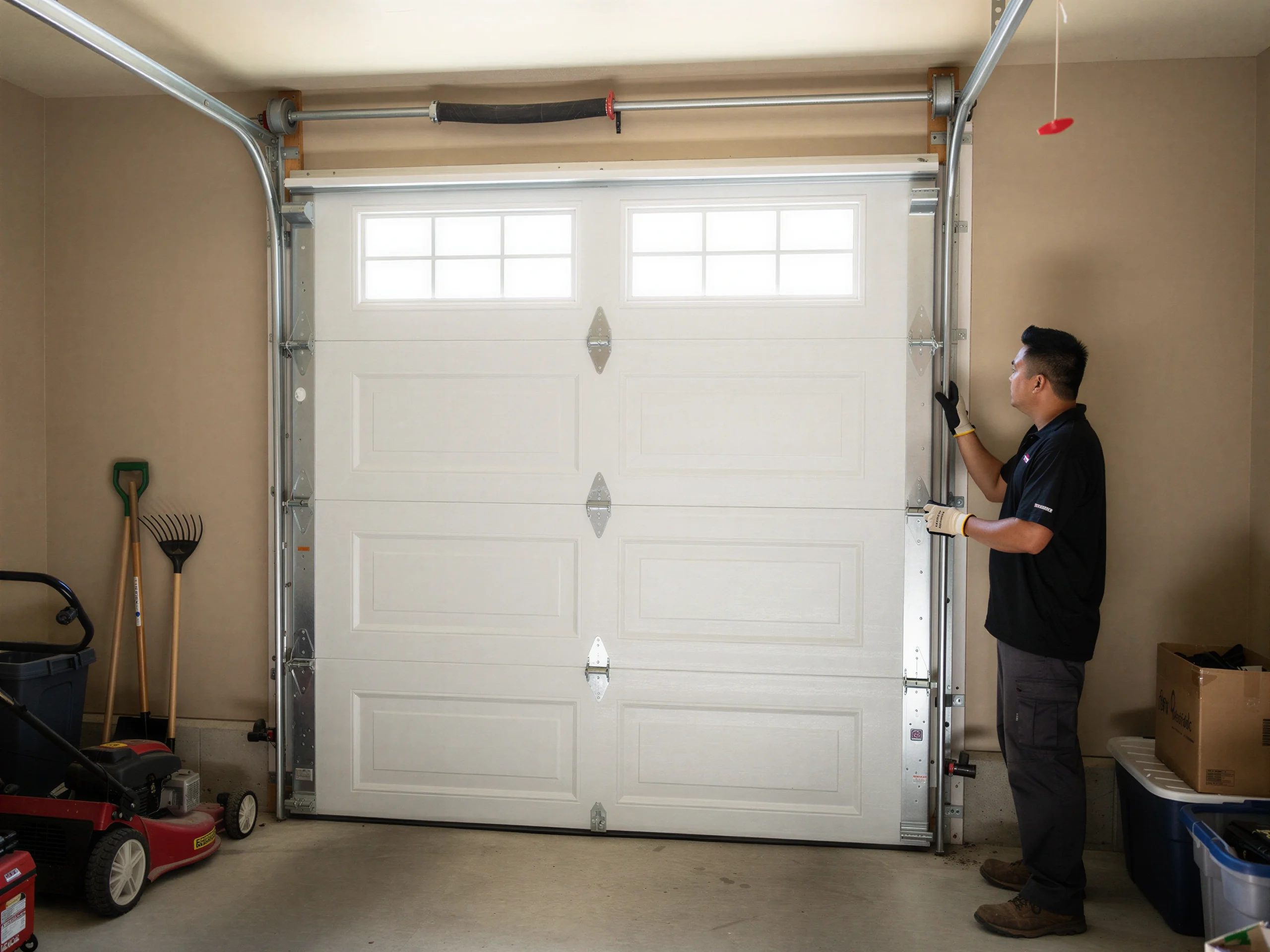
Milford's housing stock centers on 1976, which puts most garages here a decade past the one-piece doors still common closer to Novi's older pockets. By the mid-70s, builders had shifted to steel sectional doors, and that meant extension springs paired with lift cables run over pulleys at the top corners, or early torsion setups with a single cable wound on a drum. We come out from Novi, about 10 miles, and the job changes depending on which of those two systems is sitting in a given garage. A cable snap on a mid-70s extension-spring door is a different fix, with different parts, than the torsion-drum failure you'd see on something built even five years later. We size up the hardware before we quote anything, because guessing wrong on a 45-year-old setup means a second trip.
Warning signs
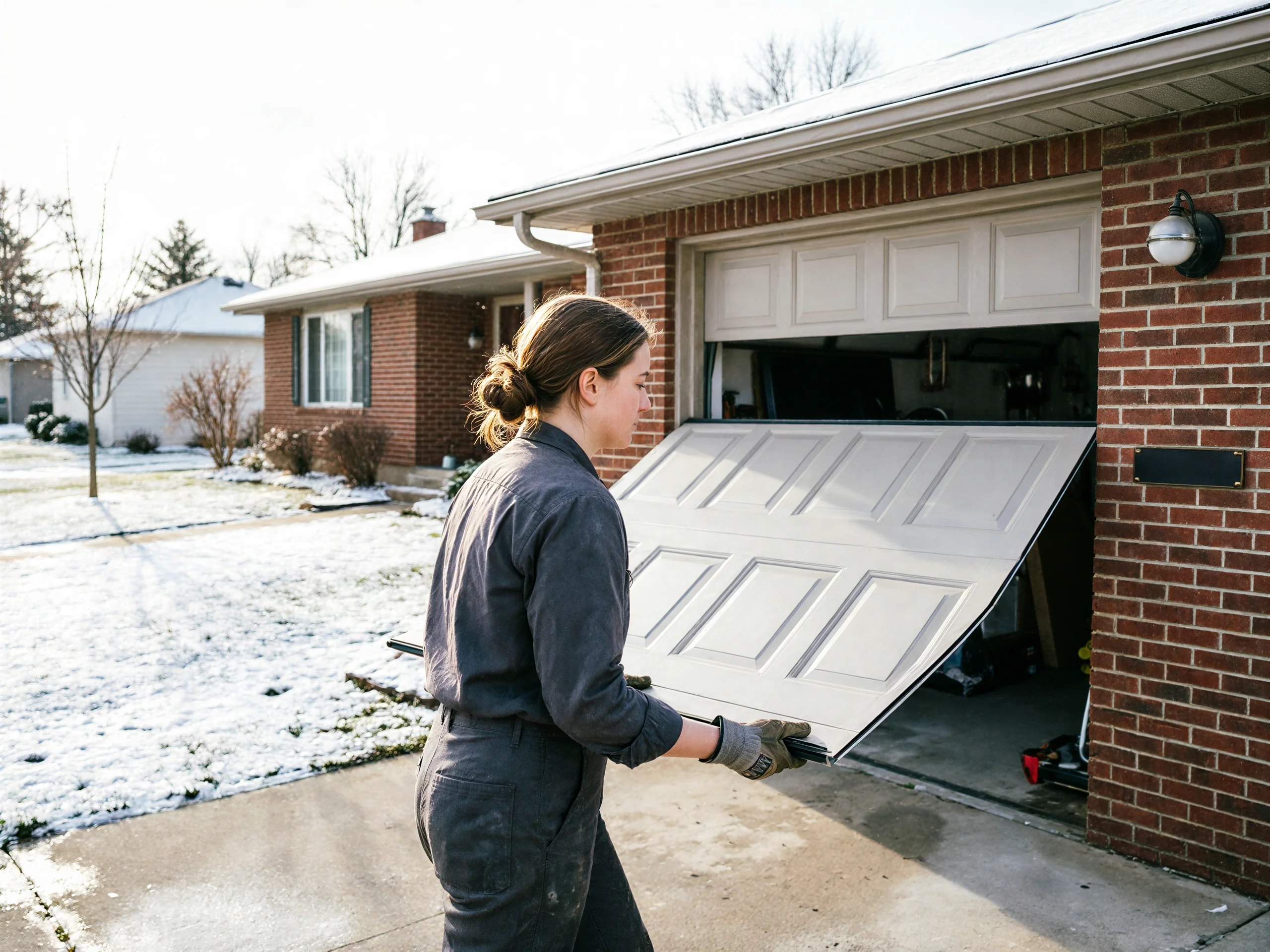
If the door hangs crooked on one side, or dropped suddenly and is now resting unevenly in the opening, a lift cable has let go.
On extension-spring systems from this era, you'll often see the frayed cable still threaded through its pulley, or the cable has jumped the pulley track entirely and is binding against the frame.
On torsion-drum setups, a snapped cable usually drops that side of the door hard and fast, and the door won't move at all if the opener tries to lift it.
Either way, the door is heavier than the spring system can safely manage with one cable gone, which is why it's off-level instead of just stuck. Rust at the cable ends is common on doors this age, especially where galvanizing has worn thin after decades of winter exposure.
Watch-outs
A frayed cable under tension doesn't fail quietly. On the older extension-spring doors common to Milford's 1976-era builds, a cable that's been slipping its pulley groove for months will eventually shear, and because the spring is still loaded, the door can drop fast on one side. We see pulley wheels on these older doors that have worn into an oval shape rather than round, which saws through a replacement cable in a fraction of the time a good pulley would. Running the door on a half-snapped cable, even once, usually bends the track or cracks a bottom panel corner, turning a cable job into a bigger one. We won't run a door with a compromised cable to 'see if it holds' - that's how a $100 part becomes a $400 repair.
The repair
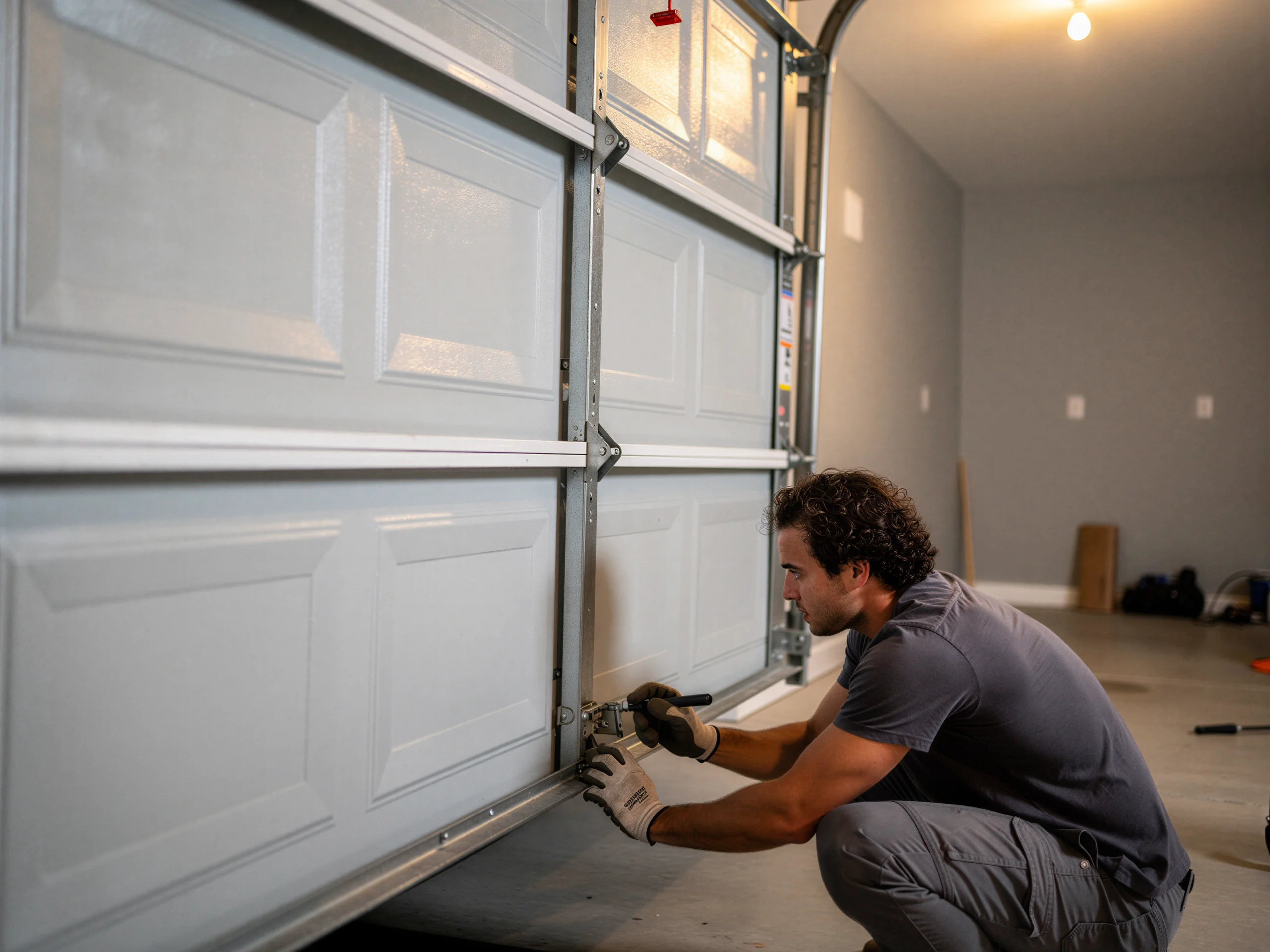
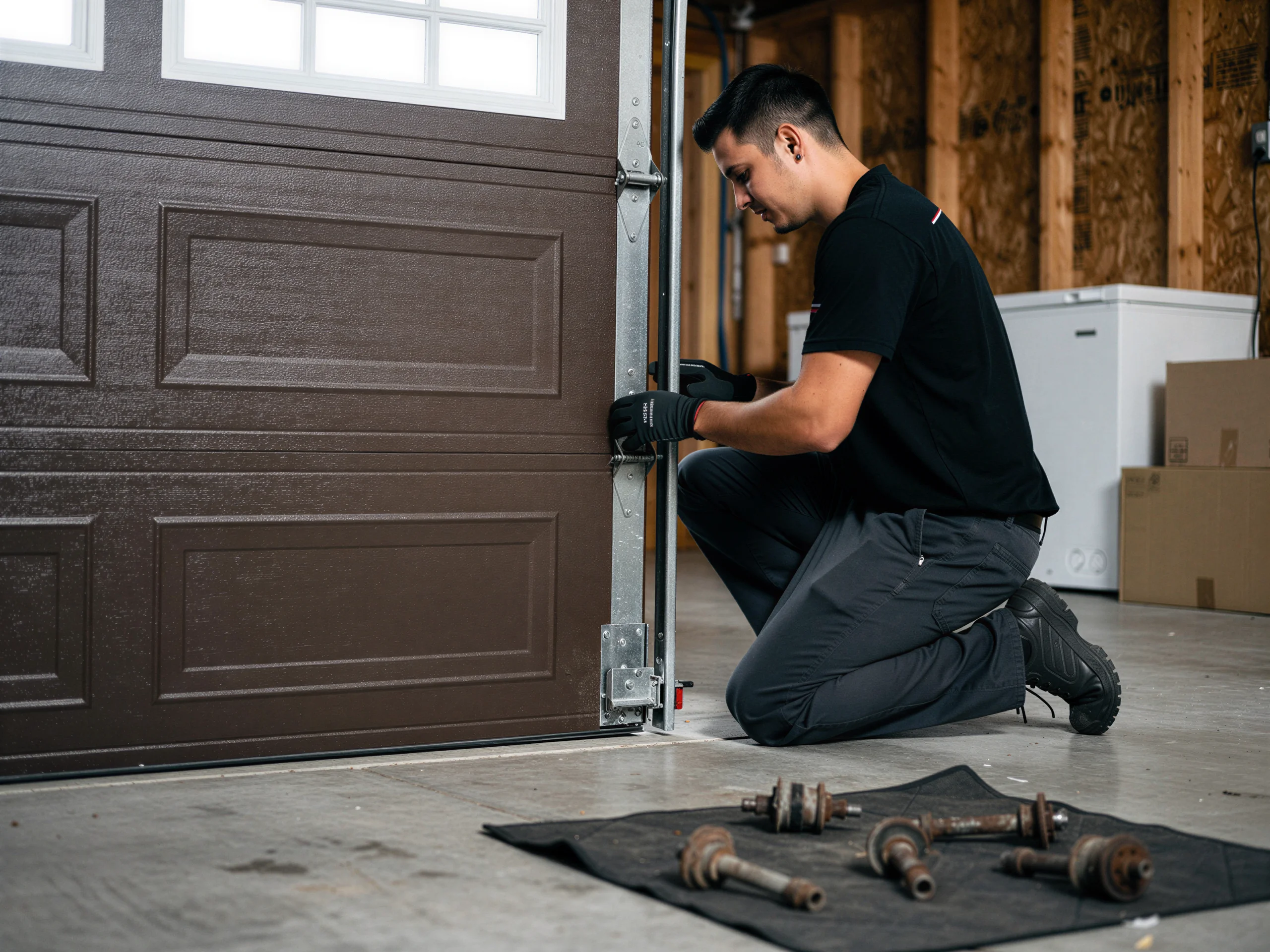
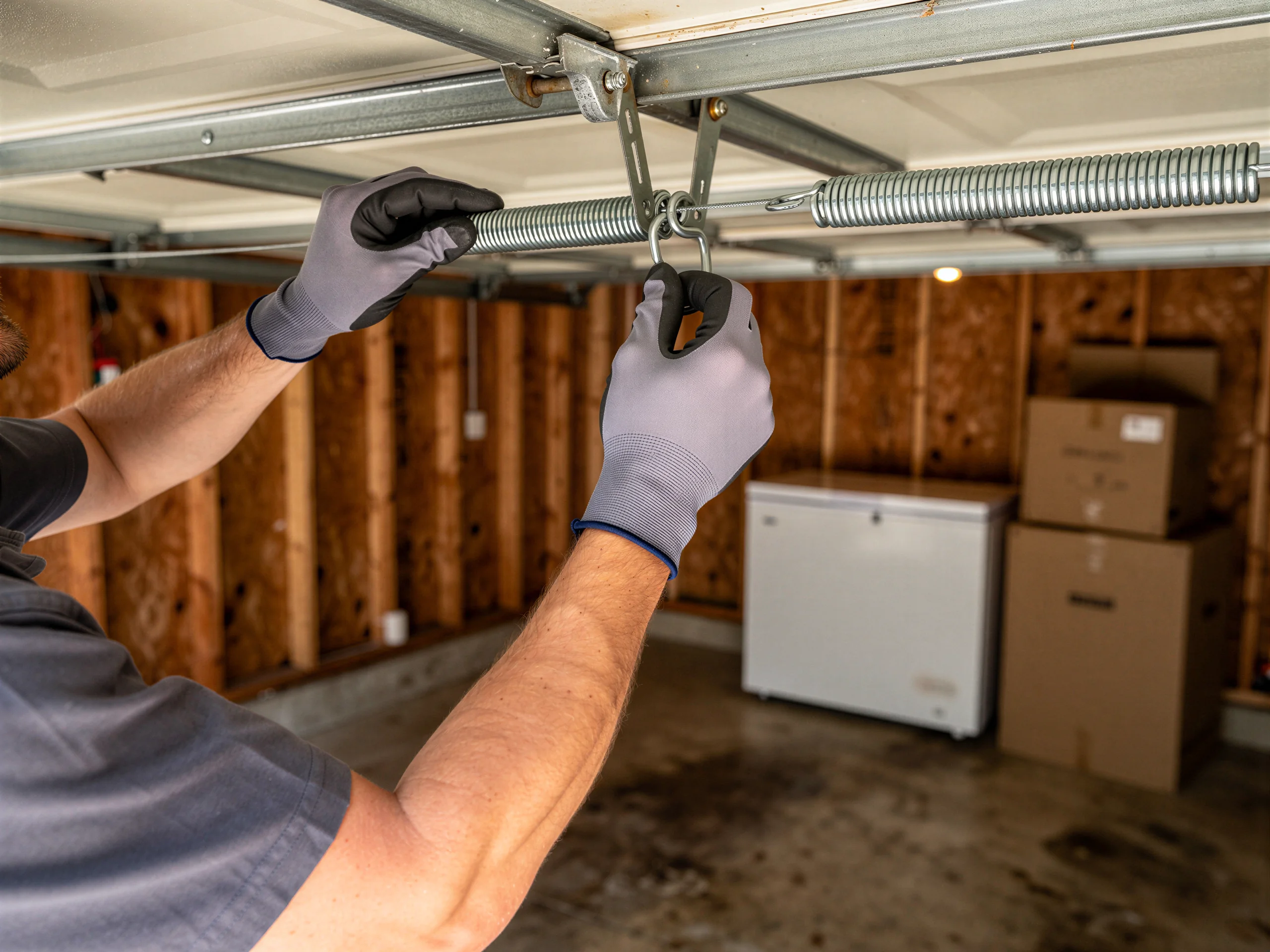
Replacing a lift cable means relieving spring tension safely first, which on extension-spring doors means unhooking the spring from its mount, not just loosening it.
We pull both cables as a pair even if only one failed, because the other one is the same age and under the same stress, and a second failure two weeks later means another drive out from Novi for a job we could've finished in one visit.
We check pulleys and the galvanized drums (on torsion setups) for wear grooves while we're in there, since a worn pulley will chew through a new cable almost as fast as the old one failed.
A straightforward two-cable swap on a standard double door is a same-visit job once we're on site; a door with a bent track or a cracked drum from running on a broken cable takes longer and costs more.
On the truck
We stock galvanized aerial cable in the gauges that fit both extension-spring and torsion-drum systems, since Milford's garages split across both depending on exact build year. We carry standard pulley wheels and the clips and fasteners that go with them, which matters because mismatched hardware is a common shortcut that fails again within a year. What we don't stock on the truck are cables cut to non-standard lengths for oversized or custom doors - those we order, and that can add a day. If your door is a double-wide or an odd height outside the common residential sizes, ask us before we head out so we can bring the right length the first time.
Questions
On doors from the mid-1970s era common in Milford, galvanized cable loses its coating over decades and starts rusting from the inside of the strand, where you can't see it. It looks fine until it doesn't. There's usually fraying at the drum or pulley end for weeks before the snap, but it's easy to miss unless you're looking up at the hardware regularly.
If the door is partway open and stuck, don't force it and don't try to lift it by hand past where it's resting. A cable that's partially failed can finish failing while someone's under the door. Leave it as is and we'll handle it when we arrive from Novi.
We replace both lift cables together, even when only one broke. They're the same age, under the same tension, and wear at close to the same rate, so fixing one and leaving the other is usually just delaying a second repair call.
Almost always, yes, if the cable is the only failure. Where it stops making sense is a door with a cracked panel or a bent track from running on a snapped cable - at that point replacement parts start adding up and a new door can be the better math.
Explore more

Ready when you are
Novi Garage Door Pros repairs and installs garage doors, springs and openers in Novi, MI and the surrounding area.